Swarmia vs Jellyfish (2026): The Finance-Grade Face-Off
THE FINANCE-GRADE FACE-OFF
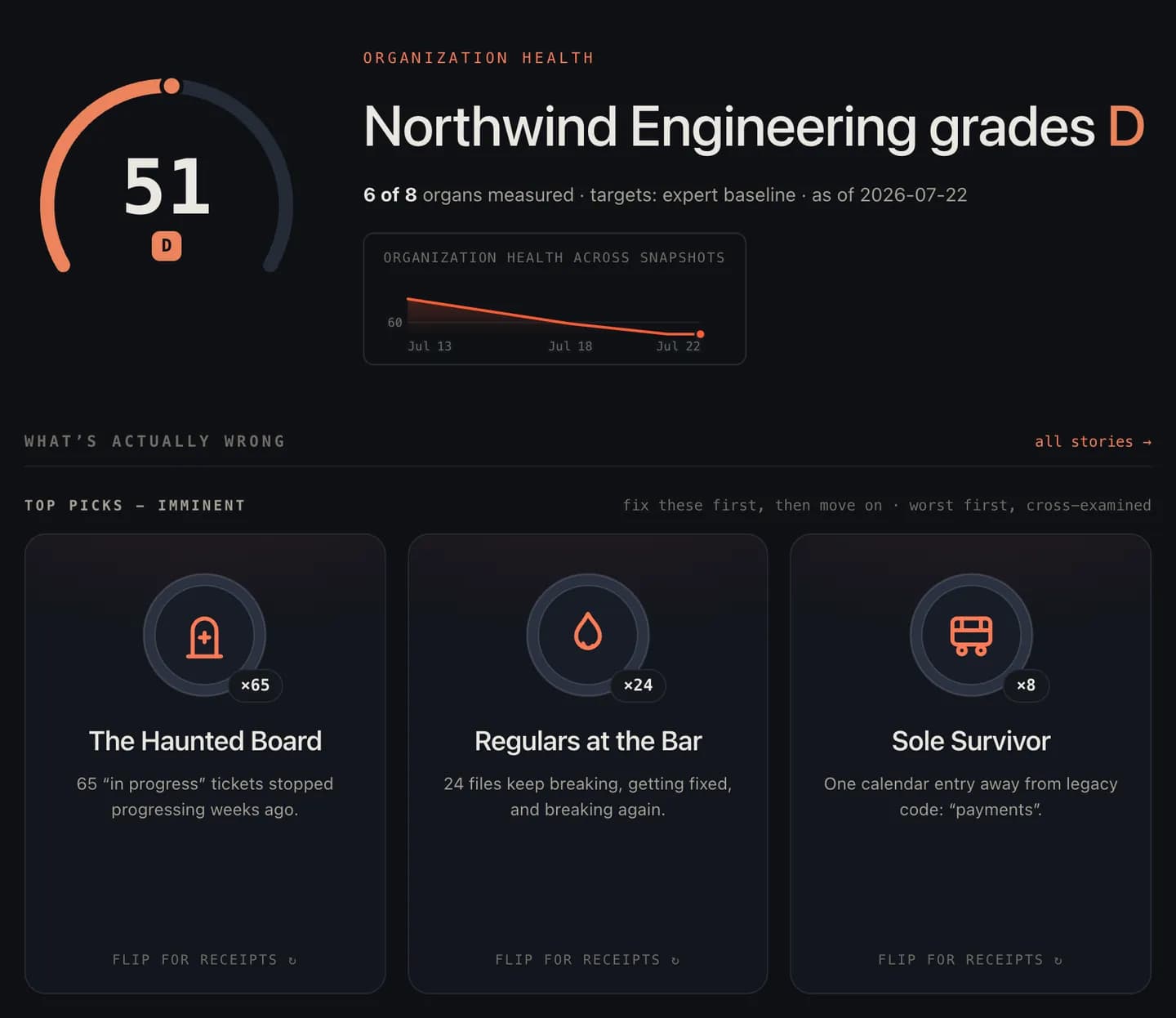
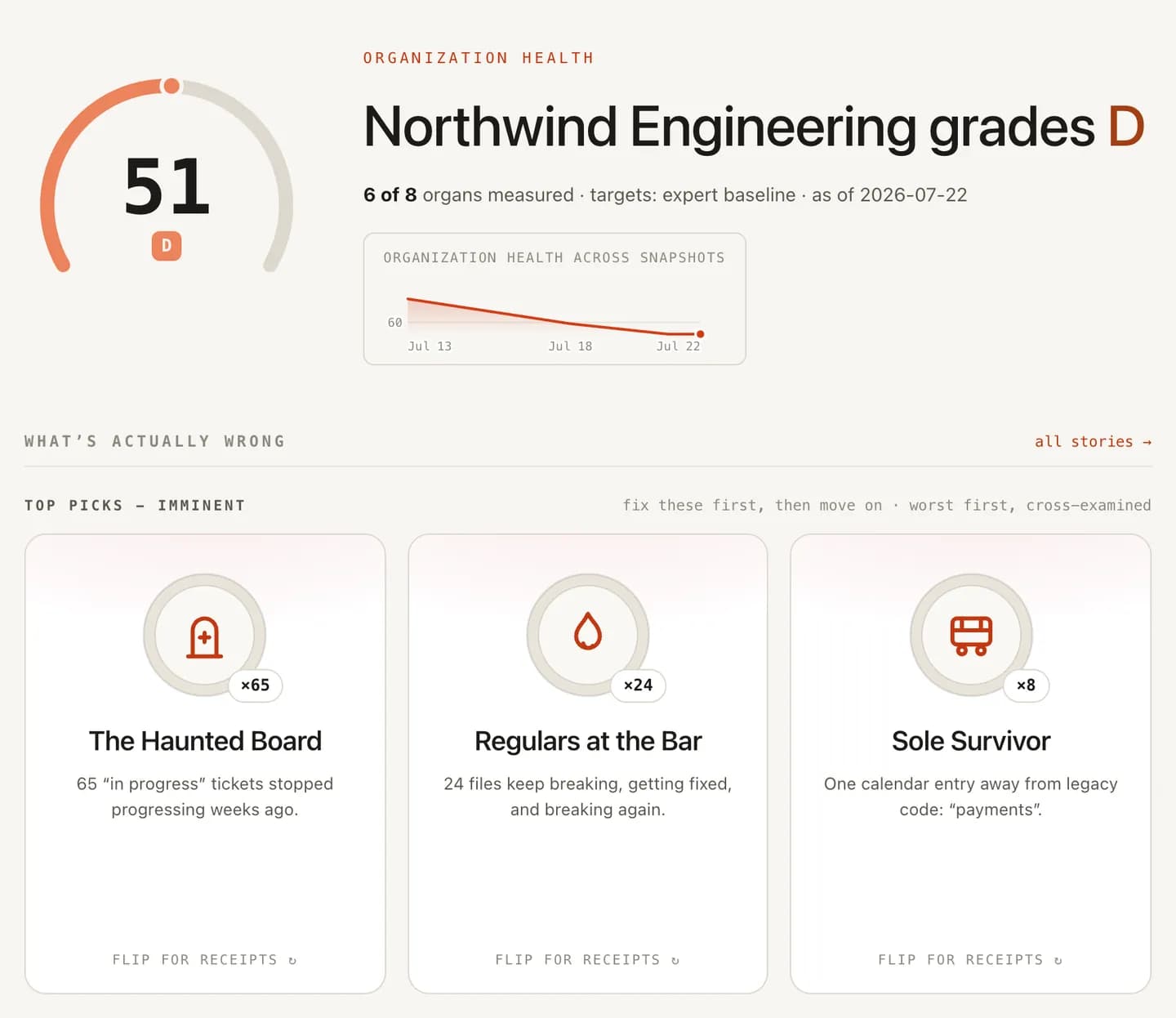
Swarmia vs Jellyfish in 2026: transparent rules against a patented effort model, capitalization on both sides, and what an auditor can actually re-derive.
The band we grade against.
Illustrative example
TL;DR: Swarmia and Jellyfish both sell the bridge between engineering and finance (allocation, cost, capitalization) from opposite philosophies. Swarmia: transparent rules you configure and can read back, self-serve pricing from free, and a shipped Slack habit loop; the honest craftsman of the category. Jellyfish: a patented model that infers effort splits from messy data with zero setup, R&D tax-credit support that makes the product look self-funding, and enterprise gravity, sold sales-led at third-party-estimated $30K+ annual minimums. The fair fork: configure-and-verify versus trust-and-scale. The question that catches both, as of July 2026: neither lets you re-derive the number your CFO signs. Every claim below is cited.
Disclosure up front: we build Busfactor, a competitor to both products here. A competitor's comparison earns trust only through verifiable fairness, so every load-bearing claim links to Swarmia's or Jellyfish's own pages, Jellyfish's unpublished pricing is flagged as estimate wherever it appears, and both products' genuine strengths are conceded without hedging. Our own argument is confined to the labeled final section.
The same promise, two architectures
Both vendors answer the question every CFO eventually asks engineering: where does the payroll actually go? (Why that question is worth answering well, and what the capitalization mechanics involve, is covered in our guide to capitalizing software development costs.)
Swarmia answers it with rules. Investment Balance categorizes issues and epics via user-defined rules over tracker attributes (with an AI auto-categorizer pitched as the route to zero uncategorized work), multiplies time allocation by your average loaded cost per engineer, and shows what each epic or initiative cost. Capitalization filters capitalizable work by any attribute combination you define, infers developer FTEs from commit and issue activity, refines them via an HR-system integration that subtracts vacations and leave, and exports monthly or annual reports by feature or employee, with SOC 1 and SOC 2 Type 2 certifications behind the process.
Jellyfish answers it with a model. The patented Work Model ingests, cleans, normalizes, and scores the data exhaust from Jira and Git, spreading fractions of each engineer's FTE proportionally across everything they touched, based on timeline evidence. No timesheets, no rules to configure, and per the current pitch, AI-powered categorization for "accurate allocation calculations regardless of data quality." DevFinOps turns that into capitalization reports that "automatically determine capitalizable status," on-demand audit packages, and R&D tax-credit support.
Same destination, opposite bets: Swarmia bets you'll invest configuration effort in exchange for explainability; Jellyfish bets you won't, and sells robustness on data you never cleaned.
Where Swarmia beats Jellyfish
- You can read the mechanism. Swarmia's rules are yours: which label means capitalizable, which attributes route to which bucket, per-item manual toggles included. When finance asks why an epic landed where it did, the answer is a rule you wrote - not a patent you licensed.
- Price and motion. Published and self-serve. Checked 28 July 2026, Swarmia's pricing page reads free up to 9 developers, then Standard at 42 € per developer per month and Enterprise at 52 €, billed annually, with single-feature plans from 4 € underneath. (They restructured during 2026: the €20 Lite tier that older comparisons quote, ours included, is no longer on the page.) Jellyfish is quote-only, sales-led, annual, and the only public figures are third-party estimates that disagree with each other: CodePulse and Vendr both report median annual contract values in the tens of thousands, from different samples. A 100-developer org on Swarmia Standard is about €4,200/month at list; a comparable Jellyfish number is unknowable without a sales cycle.
- The team-facing half. Swarmia's working agreements, curated norms with Slack-native nudges and digests, give the tool a daily life inside engineering teams. Jellyfish is a leadership-and-finance product; engineers mostly appear in it, they don't live in it.
- Documented measurement honesty. Swarmia's AI-detection docs grade their own signals by confidence and admit where they overreport. That is a level of methodological candor Jellyfish's public material doesn't attempt (its AI-work detection method is simply not disclosed).
Where Jellyfish beats Swarmia
- Robustness on messy data. Rule-based systems need rules, and tracker hygiene too. The Work Model's whole reason for existing is orgs whose Jira would make any rulebook cry: it produces a defensible-looking allocation from chaos, with zero setup and no ongoing discipline required of teams. That is a real capability Swarmia cannot match by architecture.
- The tax-credit motion. R&D tax-credit support reframes the entire purchase for a CFO: the product can plausibly pay for itself. Swarmia's capitalization page makes no such play.
- Enterprise breadth. Incident-tool integration, budget and headcount forecasting, a 20M-PR research corpus, enterprise logos, and the widest AI-tool coverage in the category (Copilot, Cursor, Claude Code, Amazon Q, Gemini, Windsurf, CodeRabbit, Devin) with token-spend rollups by tool, team, or initiative. Swarmia measures AI impact honestly but on a narrower front and without the spend depth.
- Finance mindshare. In FP&A conversations, Jellyfish is often already in the room as the vendor the finance team heard about first. Distribution is a feature.
What both keep inside the number
Strip the philosophies and the two products share a structural trait worth naming plainly:
- An AI categorizer sits inside the money. Swarmia's Investment Balance uses AI auto-categorization to reach zero uncategorized work; Jellyfish applies "AI-powered categorization" inside its allocations. In both, an opaque classifier's decision moves real money between buckets a CFO may capitalize. Silently, with no provenance trail a customer can replay.
- No named accounting standard. As of July 2026, neither vendor's capitalization page names IAS 38, ASC 350-40, or any standard its reports are prepared against.
- No reproducibility claim. Neither's public material claims that re-running a past period reproduces the same output. Swarmia's defense is certification (SOC 1/SOC 2); Jellyfish's is authority ("patented," "audit-ready"). Neither is recomputability. Our category-wide determinism audit found this pattern almost everywhere, but it lands hardest here, where the output feeds financial statements.
- Both also ship LLM assistants (Swarmia AI; Jellyfish's AI Assistant and interpreting agents) with no quote-only guarantee, and both run DevEx surveys.
Who should pick which
| You are… | Pick |
|---|---|
| Self-serve buyer, under ~100 devs, decent tracker hygiene | Swarmia |
| Want engineers to feel the tool daily (Slack loops, agreements) | Swarmia |
| Need to explain every allocation decision to finance yourself | Swarmia |
| Enterprise with messy Jira and no appetite for rule upkeep | Jellyfish |
| R&D tax credits and FP&A workflows are the business case | Jellyfish |
| Widest AI-tool spend visibility on one screen | Jellyfish |
Adjacent matchups: LinearB vs Swarmia covers Swarmia's other flank (scale vs transparency), and LinearB vs Jellyfish the self-serve-vs-sales-led fork on the metrics side.
The third option most comparisons miss
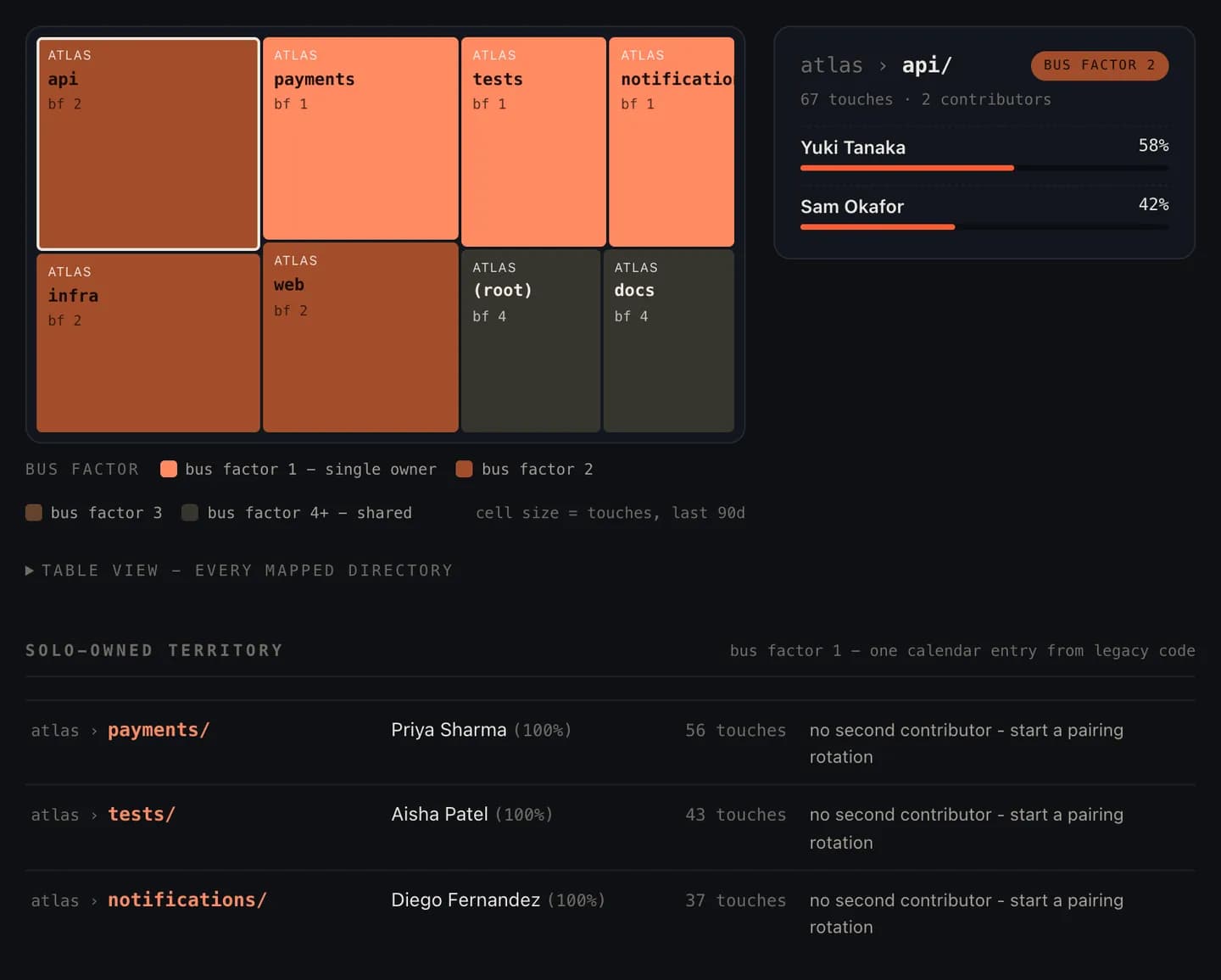
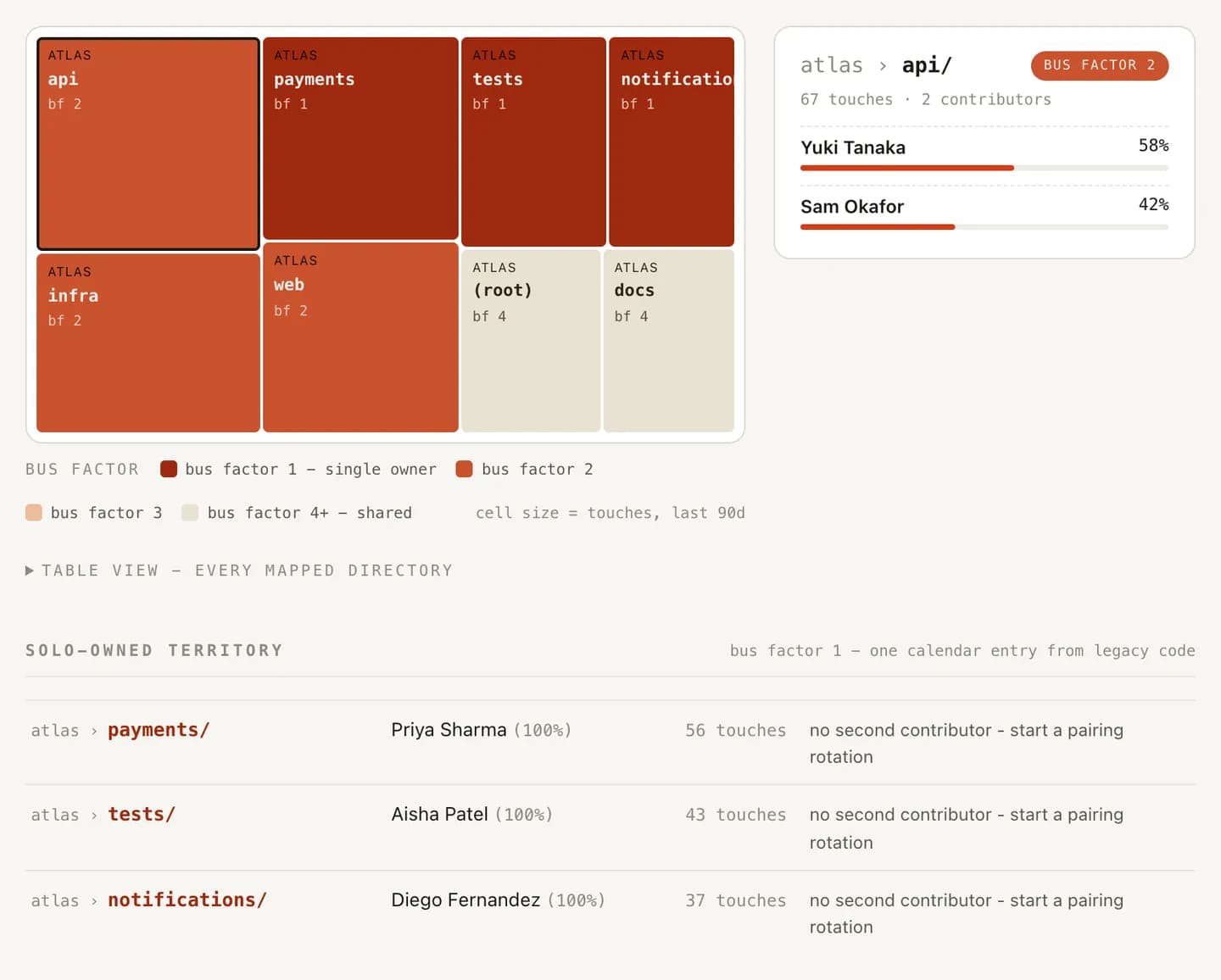
The labeled pitch, kept short. The fork above assumes you must choose between explainable rules (Swarmia) and zero-config robustness (Jellyfish), and that in either case the final number is something your auditor takes on trust: certified in one case, patented in the other.
Busfactor's position is that trust is the wrong mechanism for a finance number. Our allocation and CapEx artifacts are computed by a zero-model, deterministic path and export with their provenance printed - run id, engine version, ruleset version, content hash - so "re-run last quarter and diff the bytes" is a test your auditor can actually perform rather than a claim on a slide. AI attribution counts only deterministic evidence and discloses its blind spots instead of categorizing over them. And around the money sits a judged verdict layer that neither vendor above ships: graded findings with receipts and priced consequences. Per-developer pricing, self-serve, below the sales-led deal floor.
The head-to-head versions, concessions included: Busfactor vs Swarmia and Busfactor vs Jellyfish.
Frequently asked
Do both Swarmia and Jellyfish support software capitalization?
Yes, with opposite philosophies. Swarmia's is rule-based: you define which attributes mark capitalizable work, effort comes from commit and issue activity refined by an HR-system integration that subtracts vacations and leave, and it's backed by SOC 1 and SOC 2 Type 2 audits. Jellyfish's runs on its patented Work Model, which infers each engineer's FTE split from Jira and Git exhaust with zero setup, plus AI-powered categorization. Notably, as of July 2026, neither vendor names a specific accounting standard (like IAS 38 or ASC 350-40) on its capitalization page, and neither publishes a way for a customer to recompute the underlying effort numbers.
Which is cheaper, Swarmia or Jellyfish?
Swarmia, by a wide margin at small and mid size, and unlike Jellyfish it publishes prices at all. Checked 28 July 2026: free up to 9 developers, then single-feature plans at 4 €, 8 €, 16 € and 22 € per developer per month, Standard at 42 € for the bundle and Enterprise at 52 €, billed annually. (Swarmia restructured during 2026; the €20 Lite tier older comparisons quote no longer exists.) Jellyfish is quote-only with annual contracts, so the only public figures are third-party estimates, and they disagree: CodePulse and Vendr both report median annual contract values in the tens of thousands, from different samples, and community write-ups call Jellyfish impractical below roughly 30-50 engineers. None of that is a vendor figure or a published minimum.
Should I pick Swarmia or Jellyfish?
Pick Swarmia if you're a self-serve buyer who wants team feedback loops in Slack plus a capitalization report you can explain, and you're willing to configure the rules yourself. Pick Jellyfish if you're an enterprise whose Jira is too messy for rules, finance wants allocation and R&D tax credits handled with zero engineering discipline required, and a sales-led annual contract fits how you buy. If the deciding voice is an auditor's, ask both vendors the same question first: can we re-derive this number ourselves?
Receipts
- Swarmia - Software capitalization product page
- Swarmia - Investment Balance product page
- Swarmia - Working agreements product page
- Swarmia - AI tool detection and filters (help docs)
- Swarmia - Pricing (as of July 2026)
- Jellyfish - the Work Allocations model (how effort is calculated)
- Jellyfish - DevFinOps (capitalization + R&D tax credits)
- Jellyfish - AI Impact platform page
- CodePulse - Jellyfish pricing review (third-party estimate)