Busfactor vs Aviator (2026): Merge Queue Meets Diagnosis
MERGE QUEUE MEETS DIAGNOSIS
A fair Aviator alternative read: monorepo merge automation fully conceded, no analytics layer to strawman, and where a diagnosis fits beside the queue.
The band we grade against.
Illustrative example
TL;DR: Aviator is the purest act-layer in this comparison series: merge-queue infrastructure for large monorepos, with AI review and reviewer routing bolted to the queue. It doesn't even pretend to be an analytics product, which we respect. So this page is category clarification, not combat. If your trunk is a contested runway, Aviator is a credible traffic controller. Busfactor is the flight recorder and the incident report, a judged, priced, receipts-linked diagnosis of the delivery system the queue lives in. The only overlap is that their reviewer routing runs on the same expertise signals our knowledge map diagnoses. Different jobs; plenty of orgs need both.
Aviator sells merge automation at scale: a monorepo-aware merge queue with predictive batching, thousands of parallel queues, flaky-test handling, affected-target routing for Bazel/NX-style builds, stacked PRs, reviewer routing with SLOs and dynamic CODEOWNERS, Verify AI review, and multi-environment release tracking with cherry-picks and rollbacks. The buyer is a platform or DevEx team whose monorepo merges are a daily traffic jam. Busfactor's buyer is a CTO who wants to know why delivery leaks and what it costs. Those aren't the same purchase, and this page won't pretend they are. Snapshot as of July 2026, claims linked to live pages; verify before buying.
A fair comparison starts from the fundamentals both categories ultimately serve: the delivery metrics that actually matter.
What Aviator genuinely does well
The monorepo merge queue. Predictive batching, parallel queues, and affected-target awareness are the difference between "merge queue" as a checkbox and merge infrastructure that survives a thousand-engineer monorepo. This is hard systems work and it's their whole company. Busfactor will never build it. For us, act-layer automation is a deliberate non-goal.
Flaky-test and release plumbing. Handling flaky tests inside the queue instead of letting them poison merge decisions, plus multi-env release tracking with cherry-pick and rollback flows. That's the operational detail that only shows up in products run by people who've felt the pain.
Then there's the honest scope. Aviator ships no opinion layer and doesn't market one: no org-health dashboard, no productivity claims. In a field where every tool sprouts an "insights" tab, a vendor that just does its job is refreshing, and it makes the category line easy to draw fairly.
Enterprise plumbing at the top tier. Self-hosting, bring-your-own AI keys, SSO/SAML/ SCIM, SOC 2 Type II evidence, audit logs - the platform-team procurement checklist, present where it matters.
The category line: same signals, opposite jobs
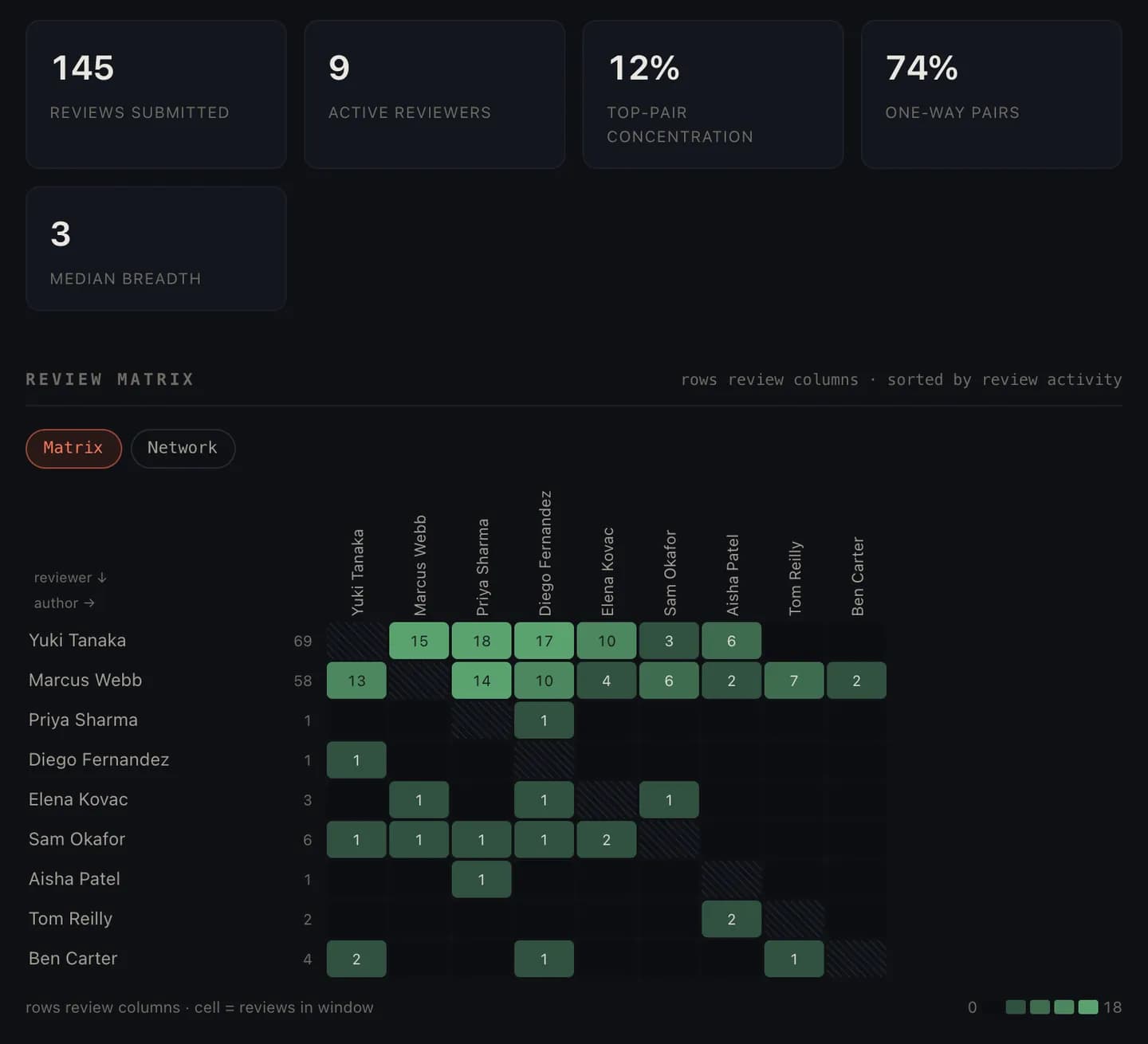
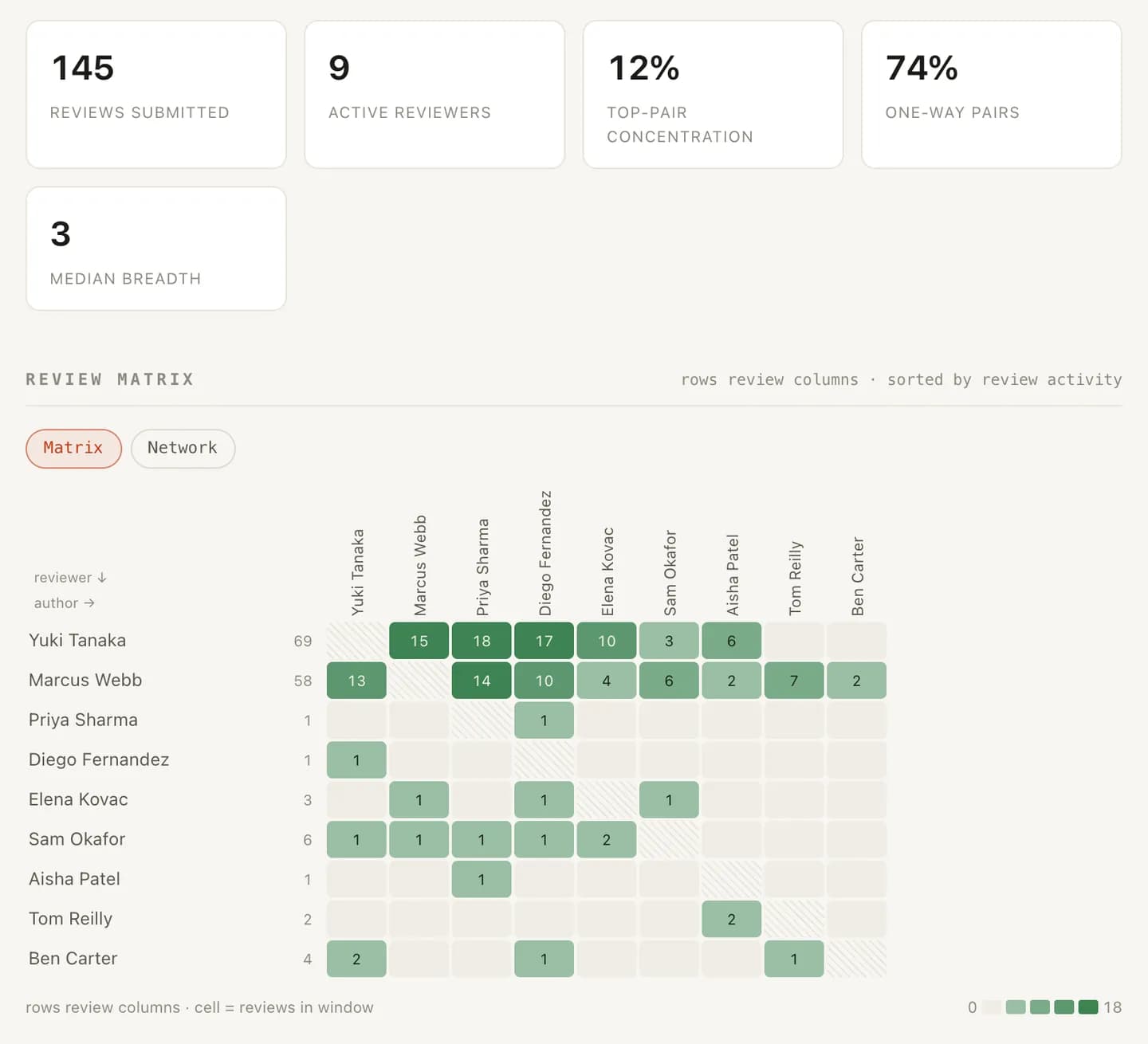
Here's the one genuinely interesting overlap. Aviator's smart reviewer routing decides who should review a PR using ownership and expertise signals - dynamic CODEOWNERS, SLOs, load. Busfactor's knowledge map is built from the same signal family: who actually knows which areas, measured from the repository record. The difference is what each product does with the signal.
Aviator uses it as plumbing: route the PR, hit the SLO, keep the queue moving. Busfactor uses it as diagnosis: show where knowledge concentrates, which areas orphan if one person is gone, and what that concentration costs. The consequence framing ("two people not showing up and eight areas have no owner") is something a routing rule never surfaces, because surfacing it isn't its job.
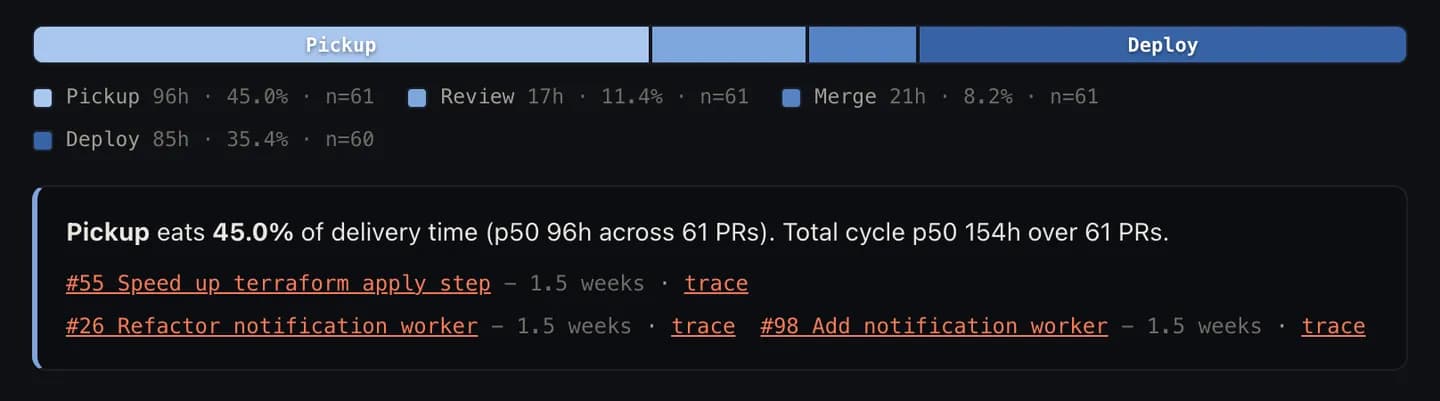
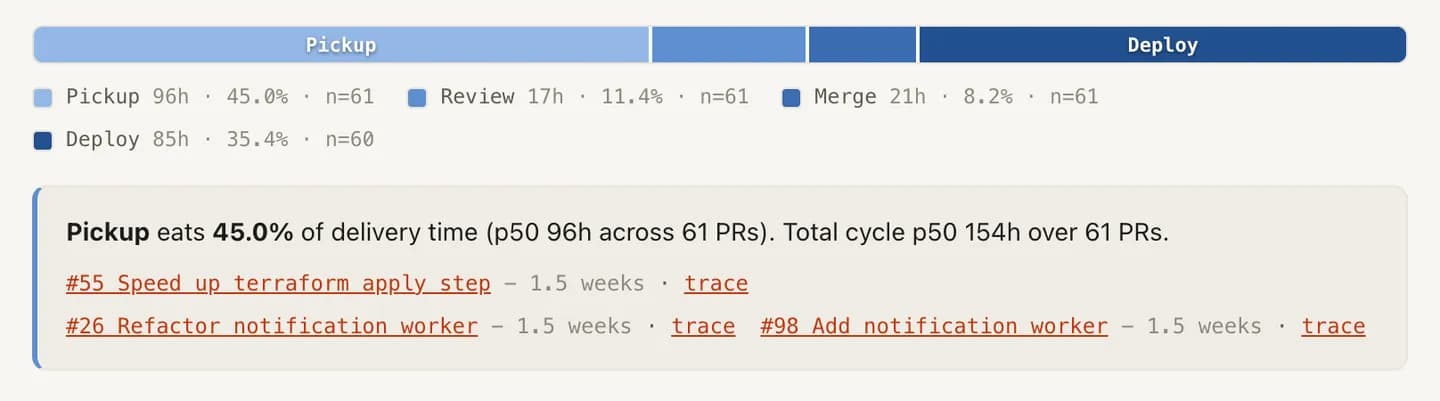
That's the whole category distinction in miniature. An act-layer optimizes flows inside the current system; an intelligence layer judges the system. Busfactor's assessment grades the org against published bands with receipts on every claim, prices the drains in your currency on the money surfaces, traces where individual work items waited and behind whom, and hands you a ranked, payback-estimated fix list. A queue makes merges faster. It cannot tell you that merges were never your bottleneck, and it has a structural conflict of interest in answering, which is exactly why the measurement should come from a party that doesn't sell the queue.
Verify, Aviator's AI reviewer, is also - like Graphite's Agent - a data source from our side: AI review-bot activity feeds Busfactor's deterministic AI-reviewed-share metric like any other reviewer bot. Their product generates events; ours quotes them.
Pricing, side by side
As of July 2026, from Aviator's pricing page: Free ($0: stacked-PR CLI, Verify on 10 PRs/month); Team ($20/dev/month: MergeQueue with parallel queues and batching, review routing with SLOs, multi-env releases, up to 10 repos); Scale ($50/dev/month: unlimited repos, monorepo affected-targets, full Verify metered at 50 PRs per user per month, then $1 per PR); Enterprise custom (self-host, BYO AI keys, SSO/SAML/SCIM, SOC 2 Type II evidence, audit logs). One drift note we caught while researching: earlier 2026 write-ups list Scale at $40/dev/month, but the live page says $50. Busfactor's per-developer tiers are on the pricing page; different budget line, different buyer, so the numbers rarely compete head-on.
Who should pick which
| You are… | Pick |
|---|---|
| A platform team whose monorepo merges are the daily bottleneck | Aviator |
| Fighting flaky tests corrupting merge decisions at scale | Aviator |
| Need reviewer routing with SLOs wired into the queue | Aviator |
| A CTO who wants a judged, priced diagnosis of the delivery system | Busfactor |
| Need to know if merge speed is even your problem before buying plumbing | Busfactor (first) |
| Want knowledge-concentration risk priced, not just routed around | Busfactor |
| Running a big monorepo and flying blind on org health | Both, honestly |
For lighter-weight stacked-PR workflows with an AI reviewer up front, read the Graphite comparison; for the portal-shaped version of this same category confusion, Cortex and Port. And when you shortlist actual engineering-intelligence tools, the buyer's guide and the evaluation questions will keep every vendor - us included - honest.
Frequently asked
Is Aviator a developer analytics product?
No. Aviator is merge-automation infrastructure: a monorepo-aware merge queue with predictive batching and parallel queues, flaky-test handling, stacked-PR tooling, smart reviewer routing with SLOs and dynamic CODEOWNERS, Verify AI review, and multi-environment release tracking. Unlike most adjacent tools it doesn't even ship an analytics dashboard as a sideline; it's pure act-layer plumbing, and honest about it. If you're comparing Aviator to engineering-intelligence tools, you're comparing across categories: it acts on PRs; SEI tools analyze the org.
How much does Aviator cost?
As of July 2026, Aviator's published pricing: Free at $0 (stacked-PR CLI, Verify on 10 PRs/month); Team at $20/dev/month (MergeQueue with parallel queues and batching, smart review routing with SLOs, multi-environment releases, up to 10 repos); Scale at $50/dev/month (unlimited repos, monorepo-aware affected-target routing, full Verify metered at 50 PRs per user per month then $1 per PR); Enterprise custom (bring-your-own AI keys, self-hosting, SSO/SAML/SCIM, SOC 2 Type II evidence, audit logs). Note: some 2026 coverage still lists Scale at $40 - the live page says $50, a reminder that pricing pages drift.
Do Aviator and Busfactor overlap at all?
Only at the level of raw signals, and in an interesting way: Aviator's smart reviewer routing uses expertise and ownership signals - the same signal family Busfactor's knowledge map is built from. Aviator uses them as plumbing (pick the right reviewer, hit the SLO); Busfactor uses them as diagnosis (show where knowledge concentrates, what an absence would orphan, what that risk costs). Nothing conflicts: the queue moves your PRs, the diagnosis tells you whether the system around the queue is healthy and what to fix first.