Busfactor vs Allstacks (2026): Dates or Root Causes
DATES OR ROOT CAUSES
An honest Allstacks alternative comparison: ML forecasting and a Gartner nod conceded, our checkable diagnosis and priced fixes, and who fits which tool.
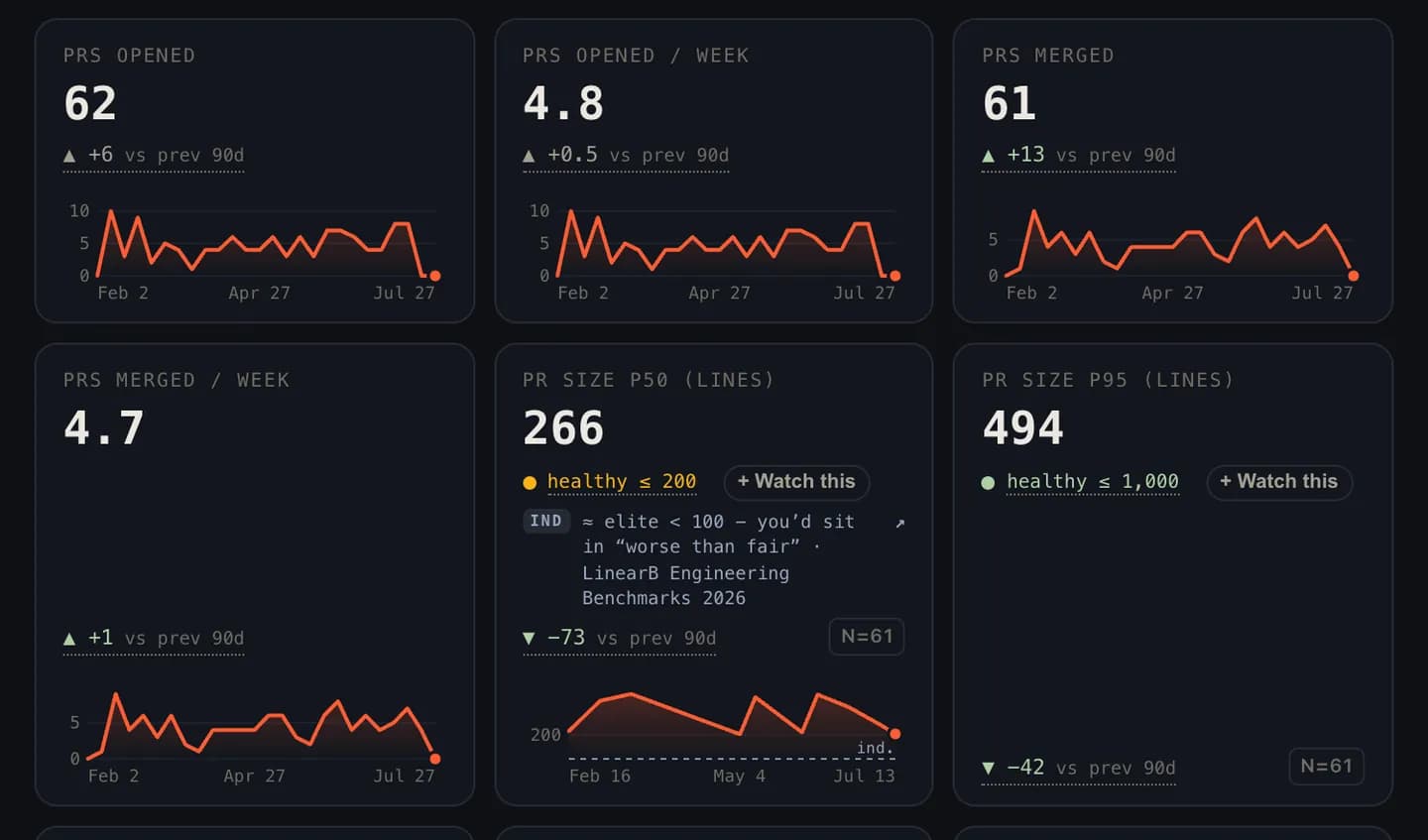
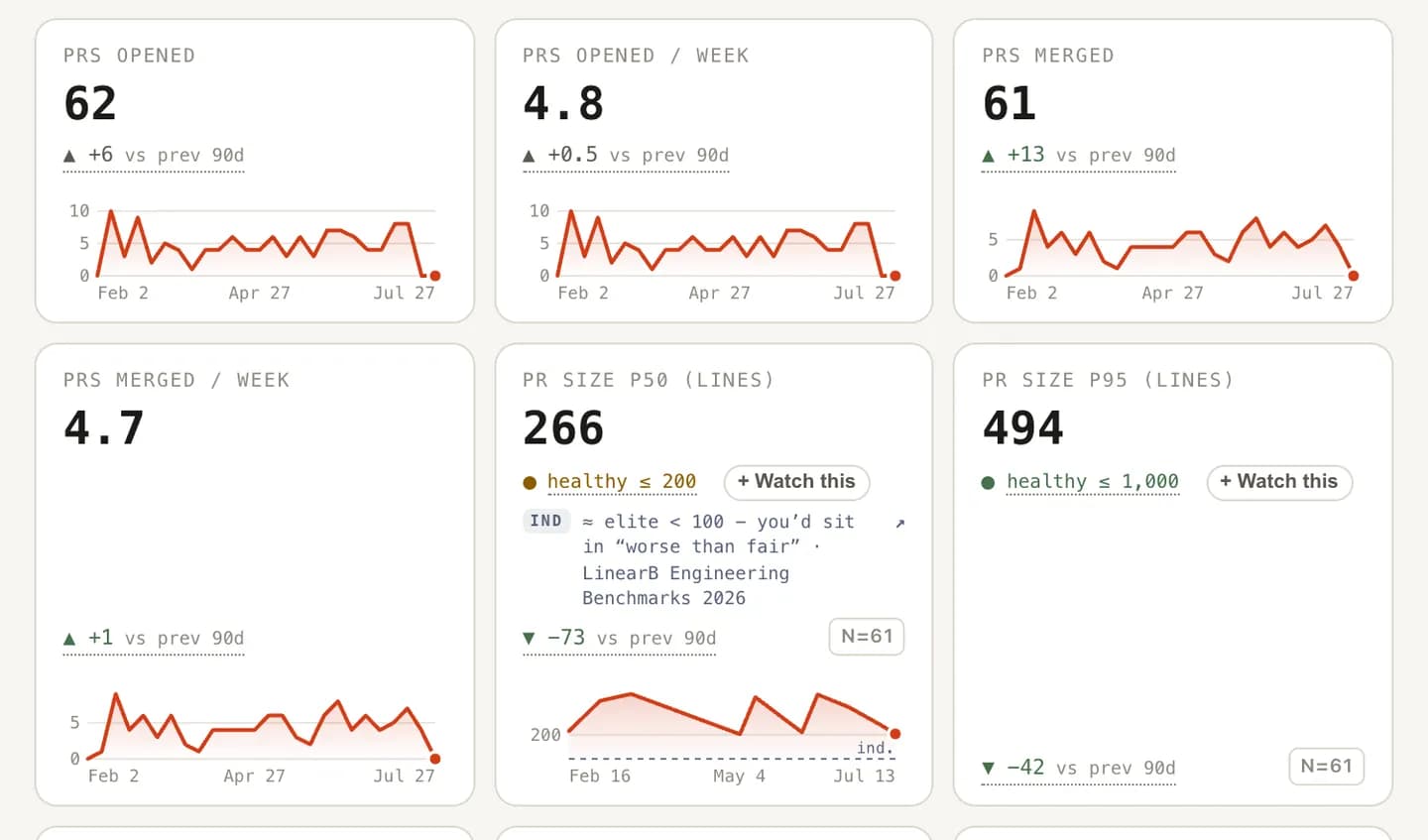
The band we grade against.
Illustrative example
TL;DR: Allstacks is the forecasting house. A 2026 Gartner Magic Quadrant Visionary, its ML models predict when work will land, from portfolio initiatives down to single Jira stories, and the whole thing now wears an "agentic platform" wrapper that reaches upstream into defining the work itself. If a predicted date is the artifact your steering meeting runs on, they've built the deepest version of it. The honest case for Busfactor as an Allstacks alternative is the other half of the question: not when will it land, but why is it slow and what does that cost. Our answers contain zero models, re-run byte-identically, and arrive with receipts and a priced fix. Below, both halves, cited.
This is a snapshot as of July 2026, and with this vendor the disclaimer is not boilerplate: Allstacks repositioned itself this year, from "Value Stream Intelligence" to "the agentic platform for product and software development", so re-verify anything load-bearing before you buy. (The vendor-neutral checklist for the whole category lives in the buyer's guide.)
What Allstacks genuinely does better
ML delivery forecasting. The core promise, "Catch delivery risk weeks early," is backed by machine-learning forecasting that predicts completion dates from portfolio initiatives down to individual Jira stories, with AI agents raising always-on risk alerts. Busfactor ships no forecasting at all, deliberately: a predicted date is a probability, and probabilities don't re-run byte-identically. If a forward-looking date is your non-negotiable artifact, Allstacks wins that row, and we forfeit it honestly rather than fake it.
The analyst nod. Allstacks was positioned as a Visionary in the 2026 Gartner Magic Quadrant for Developer Productivity Insight Platforms, the first MQ for this category, published May 2026. Busfactor holds no analyst placement. If your procurement deck needs a quadrant, that's their slide.
Product-management breadth. The new flagship, Product Studio, is a shared workspace for defining work: ideation with technical constraints, refining requirements against real delivery history, and an "adversarial AI review" of work readiness before handoff to engineering. Busfactor does nothing upstream of the repository; we diagnose work that exists. If the problem you're buying for is badly-specified work entering the pipeline, that's genuinely their territory.
Two shared values, credited. Allstacks frames productivity metrics as balanced DORA/SPACE/Flow "rather than individual activity scoring." That stated non-ranking posture has our respect, and it distinguishes both of us from the per-developer-score half of the field (see Busfactor vs Hatica for where that line runs elsewhere). Their cost capitalization also maps engineering activity to projects for audit-ready reports without timesheets. A real capability, with a caveat covered next.
A date you can't audit
So where do we part ways? Every load-bearing number in Allstacks' flagship is a model output: the completion-date forecast (internals not disclosed), the risk alerts (AI agents), the readiness review (adversarial AI). None of it comes with a reproducibility claim, because none of it can. Ask what last quarter's forecast would say if you re-ran it today and the honest answer is "whatever the current model says." No scandal there; that is simply the nature of ML forecasting. But it means the number that steers your roadmap cannot be re-derived by you, your CFO, or an auditor. The same applies to the capitalization reports if model-classified activity feeds them: "audit-ready" and "auditor-recomputable" are different claims.
Busfactor's bet is the opposite one, and it's checkable. Zero models in the metric path. Numbers quoted, never generated. Exports that print their provenance (run id, engine version, ruleset version, content hash), so "re-run last quarter and diff the bytes" is a test you can actually perform. How the whole field scores on this axis is in the determinism audit.
A pivot worth watching
The repositioning matters for buyers. Allstacks' attention is visibly moving upstream: the homepage leads with Product Studio and the agentic layer, and the old features page is gone. If you're shopping for software engineering intelligence pure and simple, you should know the vendor's flagship energy is now partly in a different category. It may be a great bet. But a diagnosis engine is our whole product, not our side quest.
Pricing. Not disclosed as of July 2026; the motion is demo-led, with a free Product Studio trial. Busfactor's tiers are per active developer, with no seat cap, published on the pricing page. We can't compare numbers a vendor doesn't print, and per our own rules we won't estimate them.
What Busfactor does that Allstacks doesn't
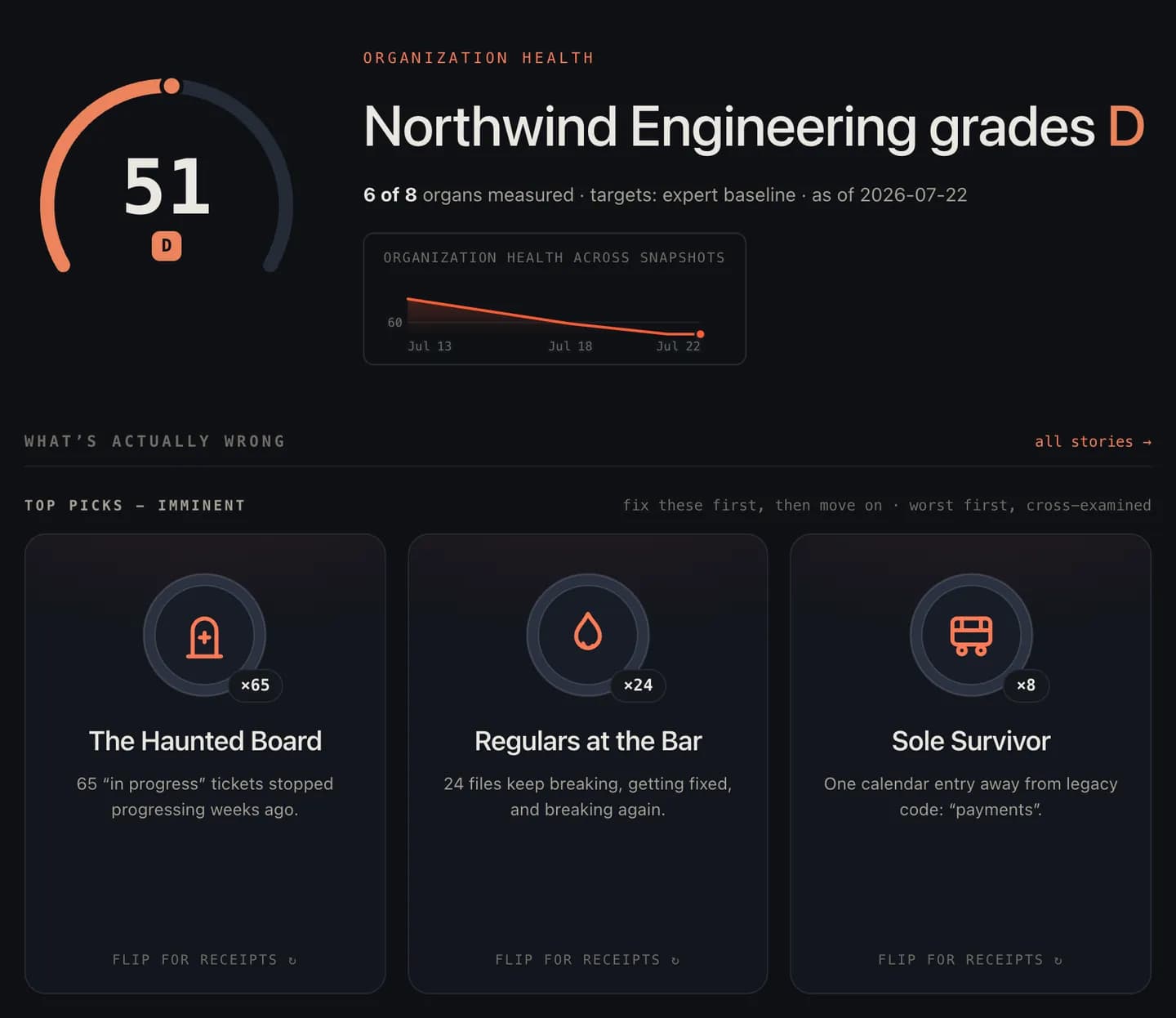
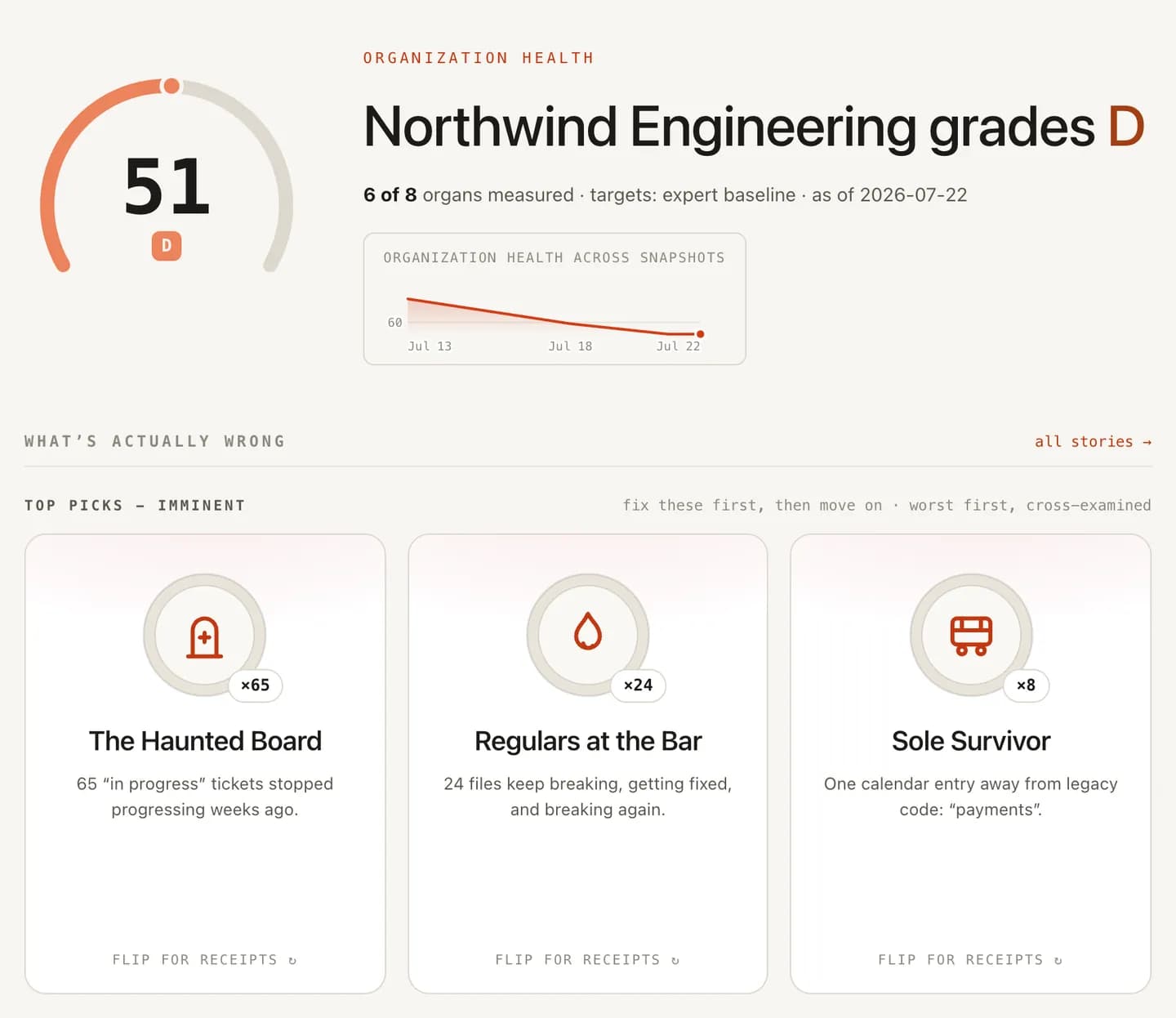
- A judged verdict. Every metric is graded against published, cited bands, with the receipts - actual PRs, commits, tickets - linked on the claim in the assessment. Allstacks tells you the work is at risk; we tell you which queue and which habit are causing it.
- Priced consequences. Drains are expressed in your currency on the money surfaces, and every prescription carries a payback estimate - the "what does slow cost us" number a forecast never produces.
- AI attribution stays deterministic: only quotable evidence counts (agent trailers, bot accounts), and the blind spots are disclosed. The method is in how to measure AI adoption.
- Knowledge risk. Bus-factor mapping that tells you what breaks when a specific person leaves. Nothing in Allstacks' delivery-intelligence scope covers it.
Choosing an Allstacks alternative: who should pick which
| You are… | Pick |
|---|---|
| Steering a portfolio on predicted completion dates, and ML dates are acceptable | Allstacks |
| Buying help defining work (requirements, readiness) as much as measuring it | Allstacks |
| Needing a Gartner quadrant placement on the procurement deck | Allstacks |
| Needing numbers a CFO or auditor can re-derive, byte for byte | Busfactor |
| After the why behind slipped dates - diagnosed, receipted, priced | Busfactor |
| Wanting published pricing you can budget against before a sales call | Busfactor |
Take the evaluation questions to both demos, and add this one: re-run last quarter's forecast today - do the numbers match? The rest of our July 2026 comparison set: Busfactor vs Hatica, Busfactor vs Code Climate, and Busfactor vs Oobeya.
Frequently asked
Is Allstacks a good tool?
Yes, and Gartner agrees: Allstacks was positioned as a Visionary in the 2026 Gartner Magic Quadrant for Developer Productivity Insight Platforms, the first MQ for this category. Its ML delivery forecasting spans portfolio initiatives down to individual Jira stories, it maps engineering cost to projects for audit-ready capitalization reports without timesheets, and it explicitly frames metrics as balanced DORA/SPACE/Flow rather than individual activity scoring. The honest criticisms are different: the forecasting model's internals aren't disclosed, the product now leans on an agentic AI layer throughout, pricing isn't published, and nothing in their public material claims a reproducible re-run.
How does Allstacks forecast delivery dates?
Via machine-learning models that predict completion dates 'from portfolio initiatives down to individual Jira stories,' with AI agents providing always-on risk alerts and recommendations on top. The model internals are not disclosed, so a predicted date can't be re-derived or audited by the buyer. Busfactor makes the opposite trade on purpose: we don't forecast at all, because a probabilistic date can't re-run byte-identically. Instead we diagnose the current bottlenecks that make dates slip, with the receipts linked on each claim.
What does Allstacks cost compared to Busfactor?
Allstacks does not publish pricing as of July 2026; it's a demo-led sales motion, with a free trial for the new Product Studio workspace. Busfactor publishes per-developer tiers on its pricing page, with every capability in every paid tier. If a published number you can budget against before talking to sales matters to you, that row is ours by default.