How to Prevent Developer Burnout: A Manager's Playbook
MANAGE THE WORKPLACE
The WHO defines burnout as unmanaged workplace stress - so the fix is managing the workplace. Rebalance load, bound on-call, cut WIP, protect recovery time.
TL;DR: The WHO defines burn-out as a syndrome resulting from chronic workplace stress that has not been successfully managed, which makes prevention a management job rather than a wellness perk. The playbook: spread the load that's quietly concentrating on your go-to people, put hard bounds on on-call and interrupts, cut work-in-progress, make recovery structural instead of aspirational, and stop promoting the people who model overwork. Detection is the smaller half, and it ends in a conversation, never a dashboard.
Every burned-out engineer was, at some earlier point, a manageable workload problem that nobody managed. That's not a guilt trip; it's the good news. It means the thing that causes burnout is a thing you control, and the cheapest moment to act is months before anyone would use the word.
Burnout is a workplace outcome, not a personal failing
Start with the definition, because it assigns the responsibility. The World Health Organization classifies burn-out as an occupational phenomenon (explicitly not a medical condition) "resulting from chronic workplace stress that has not been successfully managed," with three dimensions: energy depletion, mental distance or cynicism, and reduced professional efficacy.
Read that phrasing as a manager and it's pointed: not successfully managed. Meditation apps and pizza Fridays treat the person; the definition indicts the workload. If your prevention strategy doesn't change anyone's load, calendar, or incentives, it isn't one.
How do you detect burnout on your team?
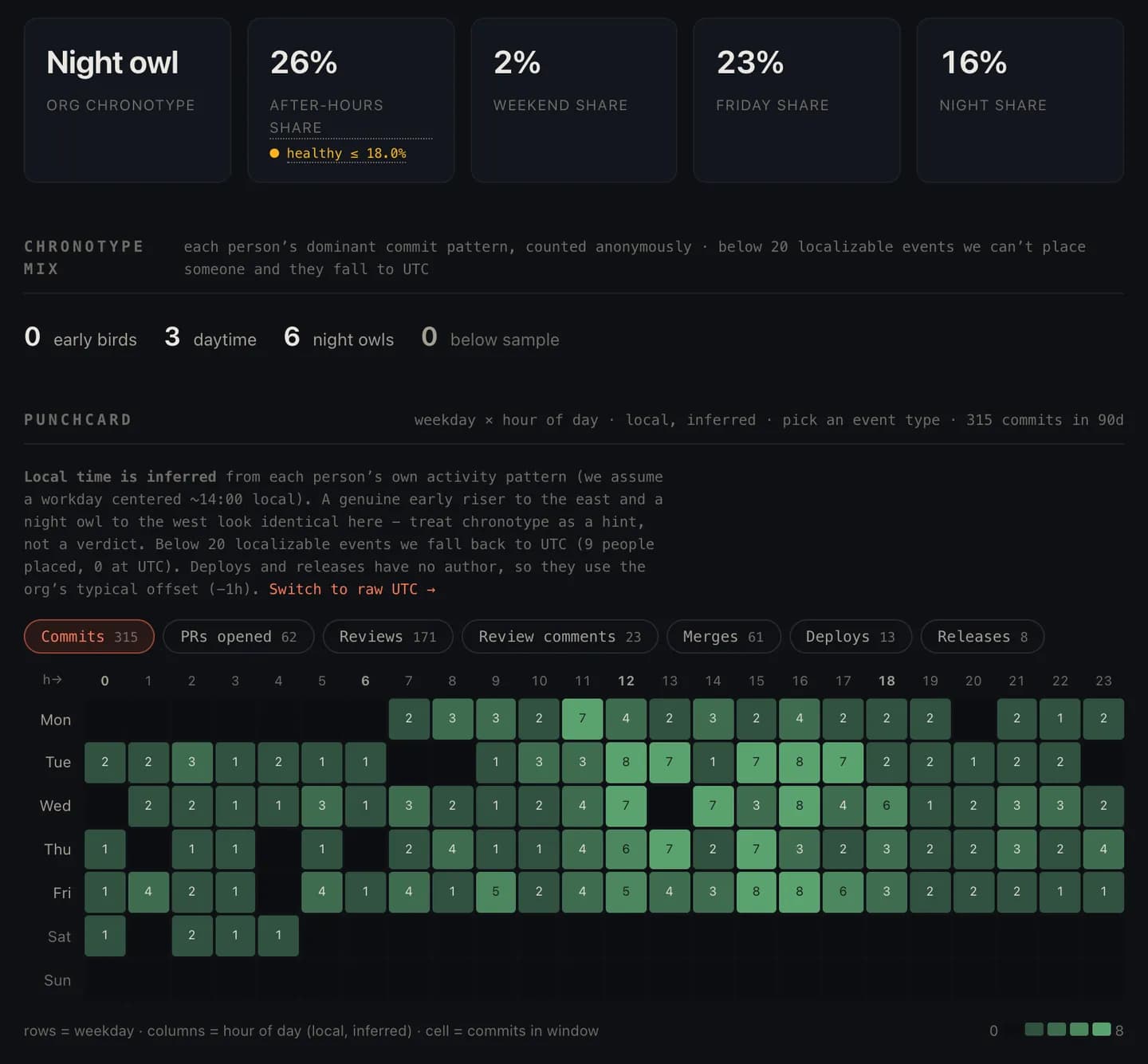
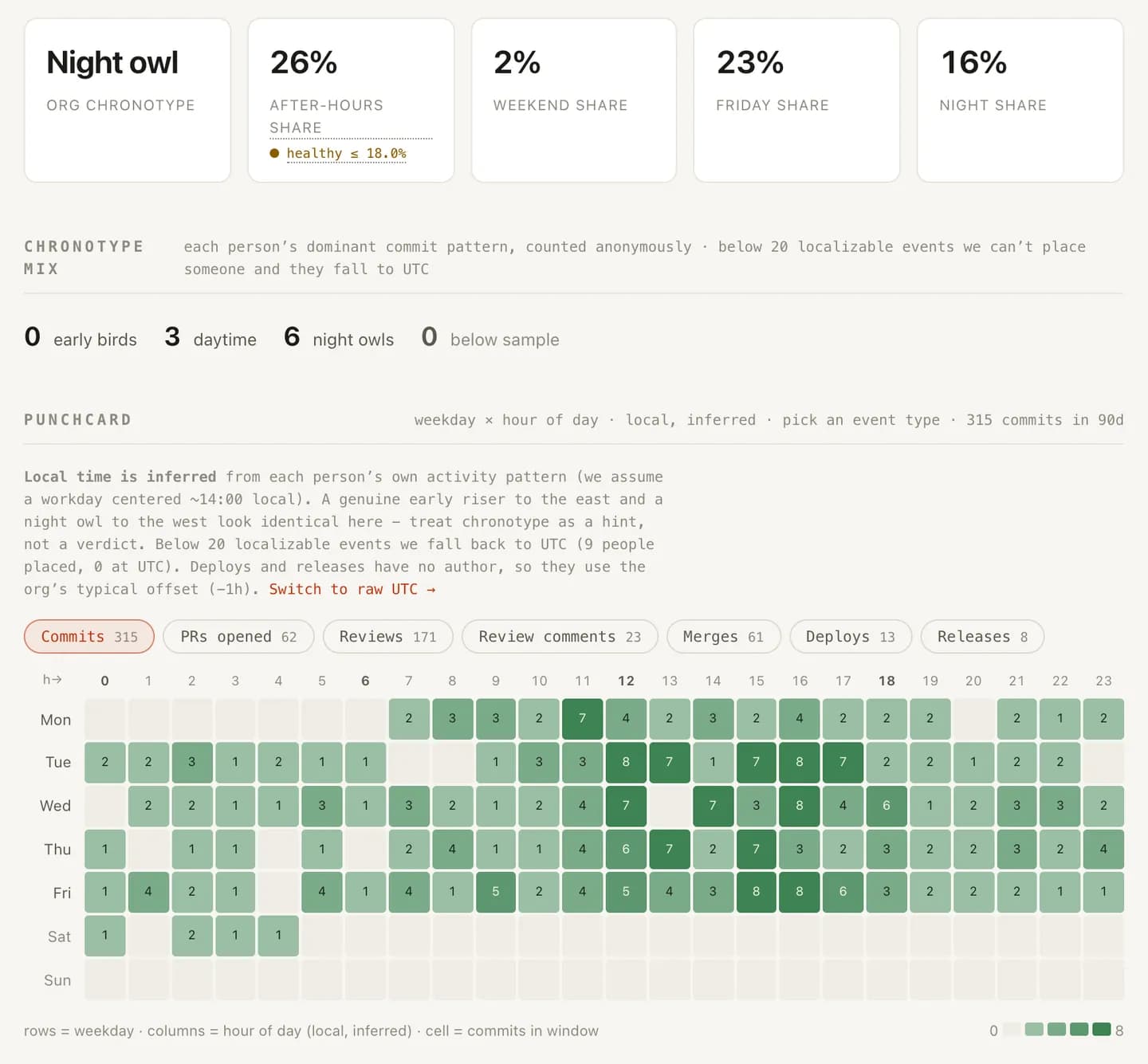
Honestly: you don't detect burnout. You detect conditions and changed patterns, and a human conversation does the rest. The full signal catalog lives in our companion piece on burnout warning signs in git data (rhythm losing its off switch, collaboration shrinking, rework climbing); this playbook's job is what to do. The manager's short checklist:
- Load concentration - the same one or two names on every review, incident, and "quick question." Today's go-to person is tomorrow's case study; glue work counts double because it's invisible and unrewarded.
- After-hours creep, sustained - evenings and weekends becoming standard for a specific person, or several at once (at which point it's a team-overload problem, one level up).
- Withdrawal - someone central going quiet in reviews and discussions. Distinguish it from struggling, which wants scope and pairing, not load relief.
- Cynicism drift - the sharp retro comments from someone who used to propose fixes.
Two or more of these, sustained for weeks, buys a conversation. Not a note in a file - a conversation.
The conversation (get this right or skip the rest)
Private, unhurried, and with the workload as the suspect:
- Open with the pattern, without verdict: "I noticed the weekend pushes have gone from rare to regular. How are you actually doing?" Receipts show you paid attention; the question hands them the interpretation.
- Listen without defending the org. The moment you explain why the crunch was necessary, the disclosure ends - permanently.
- Leave with a load change you own: "I'm moving the payments reviews off you for six weeks" beats "you should take it easy" by exactly the distance between management and advice.
- Never in a performance frame. Reduced efficacy is a symptom (it's in the WHO's definition). Putting it in a review punishes the person for the system's failure and teaches the rest of the team to hide it until the resignation letter.
If you only have this conversation in 1:1s that reliably happen, you're already ahead of most orgs. A protected 1:1 is where the early, small version of this surfaces on its own.
The prevention playbook: manage the stress at its sources
The DevEx research names three drivers of developer experience (feedback loops, cognitive load, flow state) and burnout's machinery attacks all three: slow queues stretch feedback, overload maxes cognitive load, interrupts shred flow. So the playbook is mostly load engineering:
- Spread the concentrated load, deliberately. Rotate ownership of the scariest systems, cap any one person's review share, and put glue work on the board where it costs visible capacity. This is also your bus-factor fix; burnout risk and key-person risk are the same concentration wearing two costumes.
- Bound the interrupt duty. On-call and support live in a rotation with real off weeks - off means off, no "just this one incident." Unbounded interrupt duty is the single most reliable burnout machine engineering has invented.
- Cut work-in-progress. Chronic WIP overload is chronic stress by definition: everything is late, nothing finishes, every context switch bills again. WIP limits are a burnout intervention that looks like a process tweak.
- Make recovery structural. Post-incident and post-crunch paybacks that are scheduled instead of offered. Quiet weekends that stay quiet, which starts with your own 11pm messages, because the team reads your send times as policy, whatever the handbook says.
- Stop paying for overwork. Audit your last few promotions and public praises: if visible overwork got rewarded, you've priced burnout as a career strategy and no wellness program can out-spend that signal. Praise outcomes and sustainability, loudly and by name.
- Keep one perceptual channel open. The SPACE framework insists on pairing workflow data with at least one perceptual measure; satisfaction and well-being is a first-class dimension of the framework. A recurring, honestly answered "how sustainable was this month?" catches what no repo can.
What good looks like after 90 days: the after-hours footprint trends down, no single name dominates the review and incident logs, the rotation's off weeks hold, and the sharpest person in retro is proposing fixes again.
If someone is already past prevention (exhausted, cynical, running on fumes) the playbook compresses: reduce their load now, arrange real time off with a coverage plan and zero penalty, and make the return a ramp, not a cliff back onto the same treadmill that produced the problem.
Where Busfactor fits, and where it stops
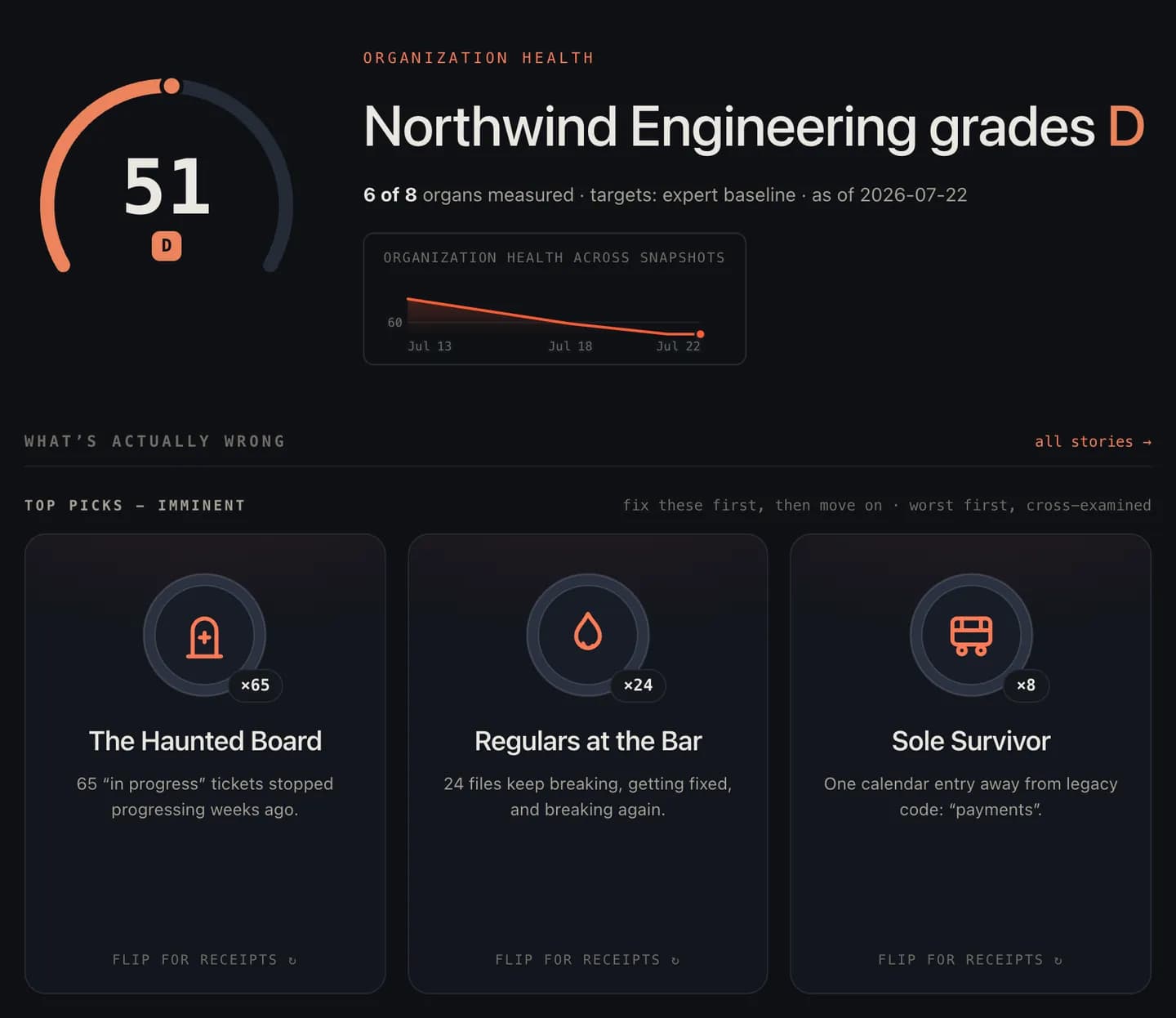
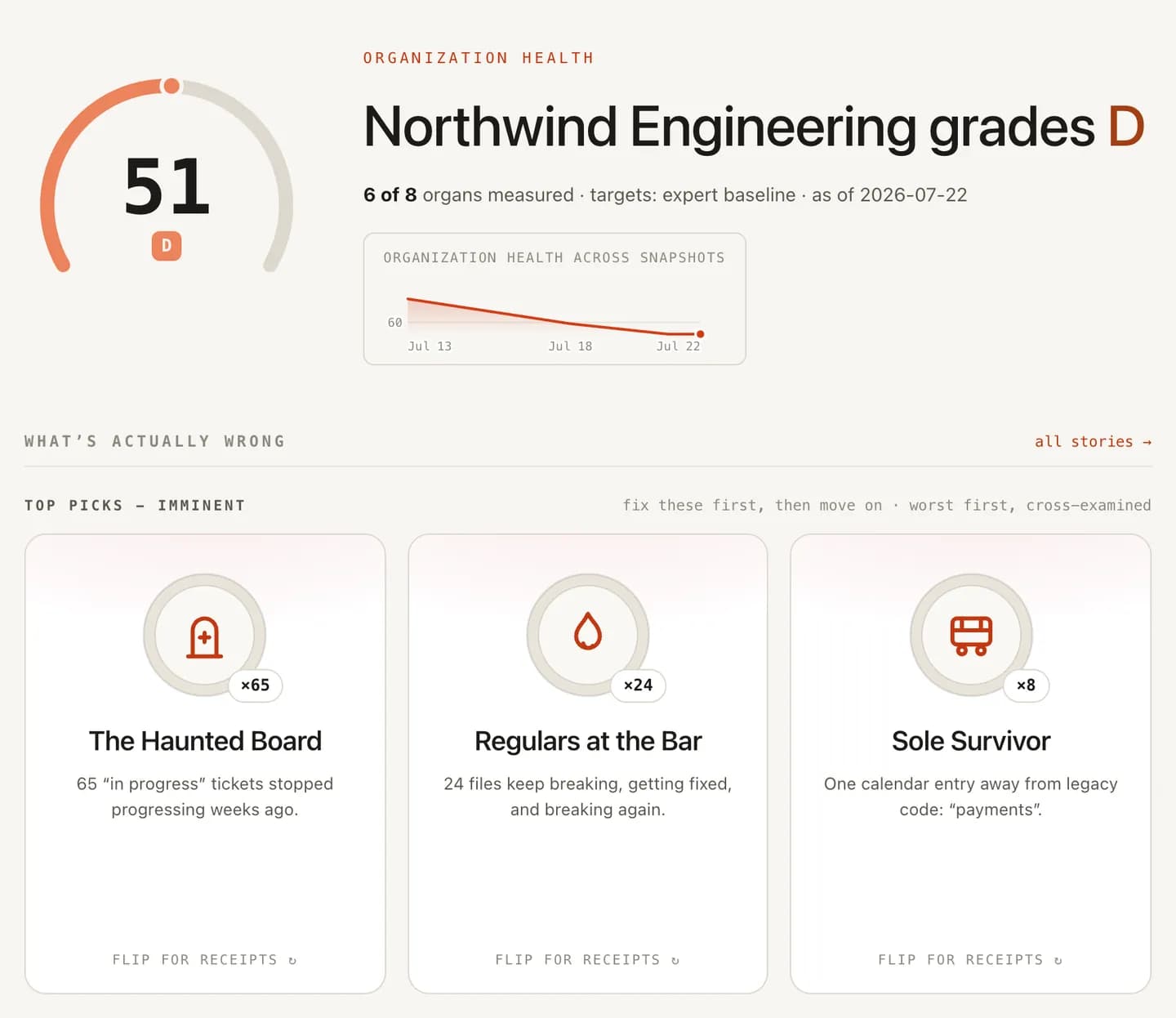
Busfactor watches the conditions: load concentration by person and area, review-share imbalance, after-hours rhythm trends, collaboration footprints shrinking. All at the system level, with receipts, framed as capacity findings. It does not and will not diagnose burnout in a person: that's a conversation between two humans, and the WHO's definition puts it outside what any repo can know. What the data buys you is timing. Seeing the burnout factory while it's still just a workload problem is the only moment prevention is cheap.
Frequently asked
Can you detect burnout from engineering data?
You can detect the conditions and the traces - load concentrating on one person, after-hours activity trending up, collaboration shrinking, rework rising - but not the syndrome. Burnout is confirmed only by the human, in a private conversation. Data's honest role is earlier and humbler: it shows you whose workload looks like a burnout factory while there's still time to change it.
What causes burnout in software engineers?
Per the WHO's definition, chronic workplace stress that has not been successfully managed - the cause lives in the workplace, not the person's resilience. In engineering the usual machinery is specific: load concentrating on go-to people, unbounded on-call and interrupt duty, chronic work-in-progress overload, invisible glue work, and incentive systems that read overwork as commitment.
How should a manager talk to an engineer about possible burnout?
Privately, kindly, and with the workload as the suspect: name the pattern without verdict ('I noticed the weekend pushes have become regular - how are you actually doing?'), listen without defending the org, and leave with a concrete load change you own, not advice they should follow. Never raise it in a performance context, and never frame rest as something to be earned back later.
Is burnout a performance issue?
No - and treating it as one is both wrong and self-defeating. The WHO classifies burn-out as an occupational phenomenon: the workplace failed to manage stress, so the workplace owns the fix. Reduced output from a burning-out engineer is a symptom; putting it in a review punishes the person for the system's failure and teaches everyone else to hide it until they resign instead.