How to Reduce Bus Factor Without Slowing the Team
FIX IT WITHOUT PAIRING
Pairing on everything is a tax nobody pays for long. The bus-factor fixes that stick - review rotation, ownership spreading, living docs - ranked by cost.
TL;DR: Most bus-factor initiatives die of their own cost: mandatory pairing, wiki weeks, and "everyone should know everything" all tax daily delivery until the team quietly stops paying. The moves that survive are the ones embedded in work you're doing anyway - review rotation, author/reviewer swaps on real features, docs anchored where the churn is - applied only to the areas where a departure would actually hurt. Ranked by cost below, cheapest first.
So you measured it. Maybe you ran the math from how to calculate bus factor, maybe a resignation ran it for you, and now you have the list: the areas of your codebase one person away from orphaned. Avelino et al. (2016) found 34% of 133 popular GitHub systems at a truck factor of exactly 1, so odds are your list isn't short.
The trap at this exact moment is the grand initiative. Knowledge-sharing Fridays. Mandatory pairing. A documentation sprint. They all share a failure mode: they cost delivery speed every single day, the benefit is invisible until someone leaves, and so the first crunch kills them. A fix that doesn't survive contact with a deadline isn't a fix - it's a morale expense.
The sustainable approach inverts it: spend almost nothing, but spend it precisely.
First: shrink the problem before solving it
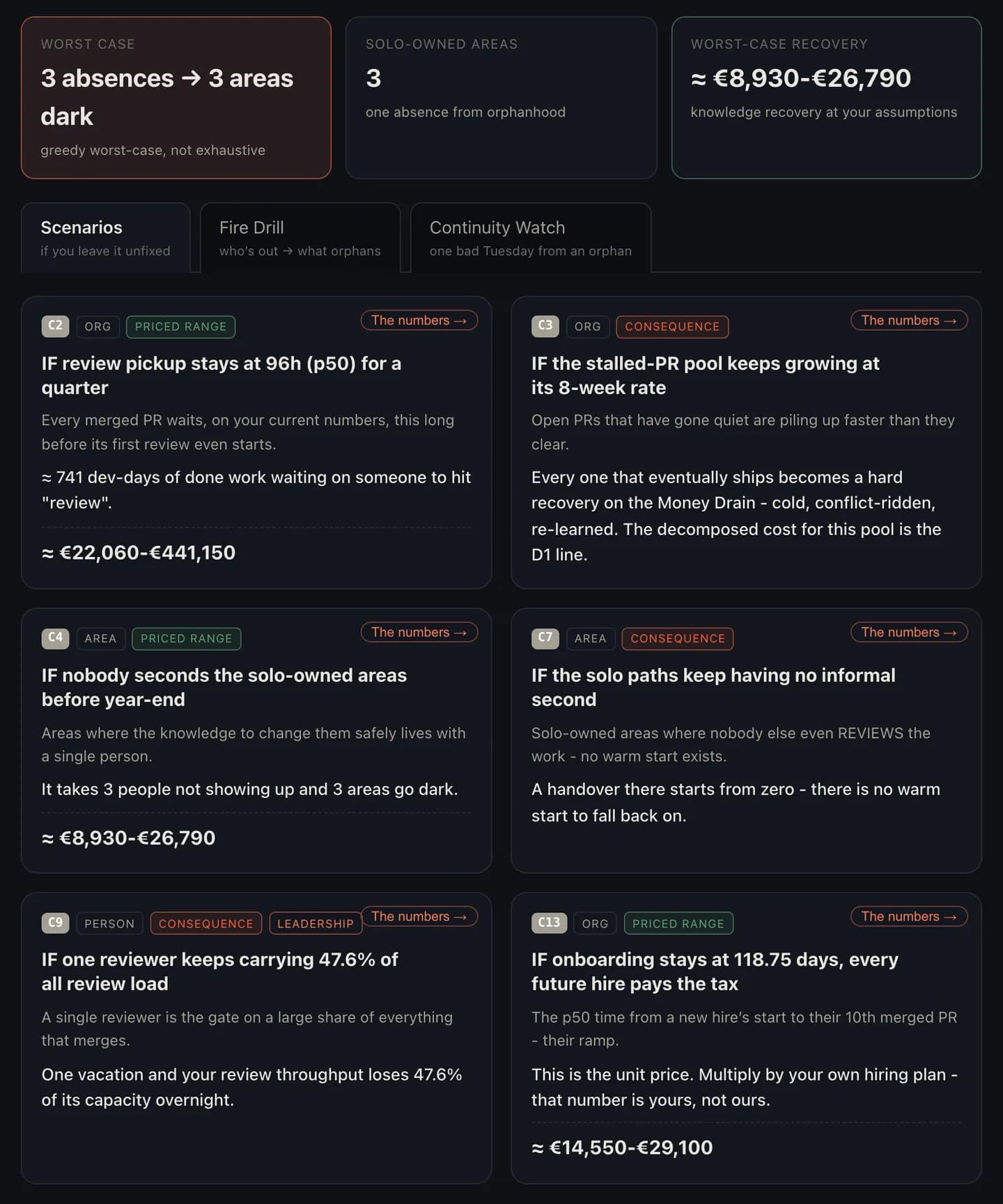
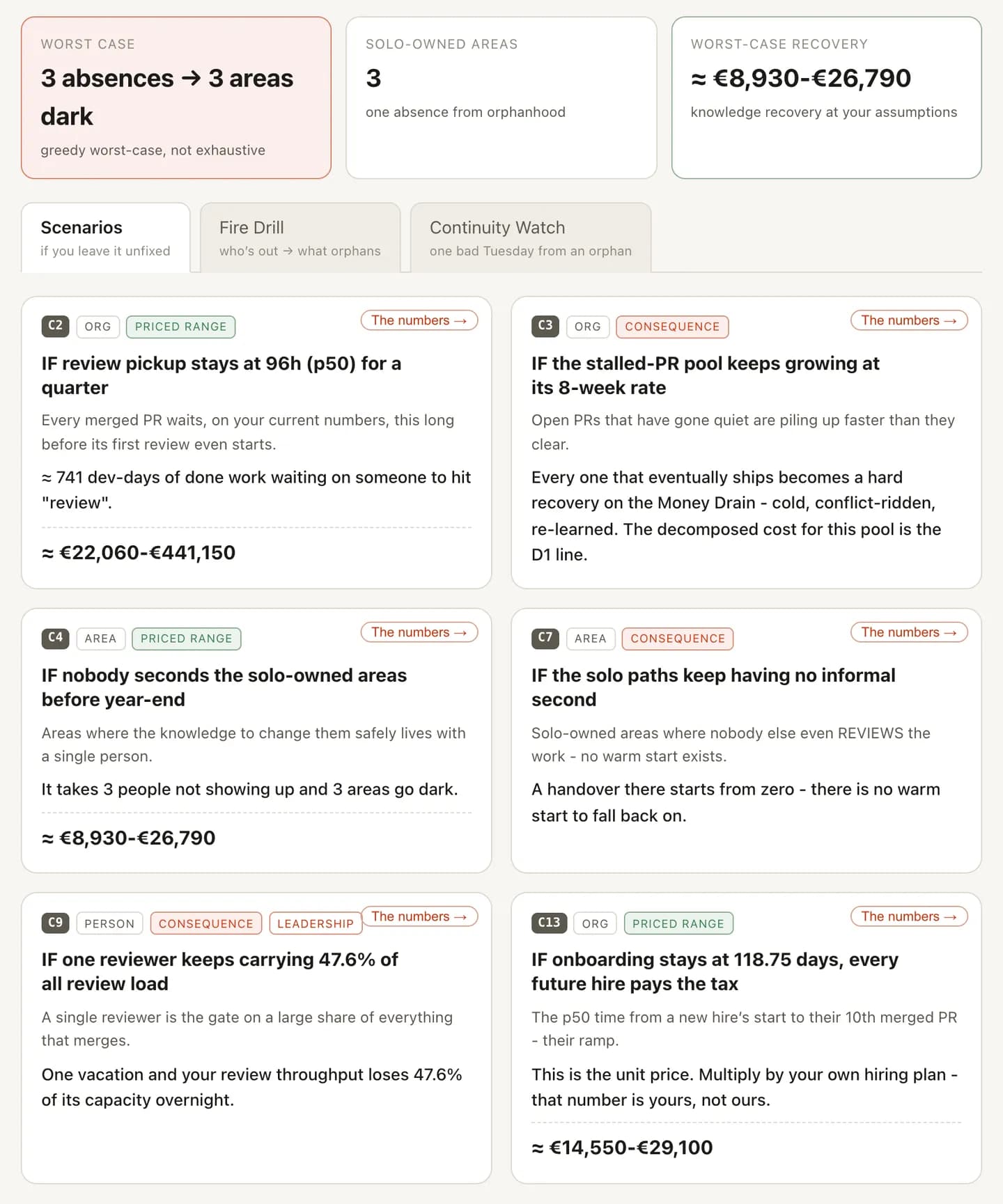
Don't reduce "the team's bus factor." Reduce the bus factor of the three to five areas where it actually matters. Rank your bus-factor-1 inventory by blast radius (what stalls if this orphans?) and activity (how hot is the code?), fix the top, and explicitly skip the rest. A single-owned corner nobody has touched in a year is not a priority; your payments integration with one author and one reviewer - the same person - is.
This ranking is what makes "without slowing the team" possible. Redundancy everywhere is expensive. Redundancy in five areas is a rounding error.
Move 1: Review rotation (nearly free)
The cheapest knowledge transfer in software. If the same expert approves every PR into an area, assign a second reviewer and keep them assigned. They earn context on the expert's diffs (real changes, real reasoning, real gotchas) without a single meeting.
This isn't a hopeful theory about reviews. Bacchelli and Bird's ICSE 2013 study found that although finding defects is the top stated motivation for code review, the actual outcomes lean toward knowledge transfer, team awareness, and alternative solutions. And Sadowski et al.'s study of ~9M reviewed changes at Google lists education and context-sharing as a core purpose of the practice, at a company that reviews essentially every change with a median of one approver.
Cost control matters here: keep the PRs small. The Cisco-based SmartBear research recommends reviewing no more than about 200-400 lines at a time. Beyond that, comprehension collapses, and a second reviewer on a 2,000-line diff learns nothing but resentment. Small diffs are what make rotation cheap enough to be permanent (the broader case is in small pull requests).
Move 2: Swap author and reviewer (one slower feature)
Review teaches the map; authorship teaches the terrain. When the next meaningful feature lands in a single-owner area, route it to a non-expert, with the expert reviewing instead of writing.
Yes, that feature ships slower. That's the entire cost, paid once, and it buys the thing no document can: a second person who has made changes and survived, who knows the local test quirks and the deploy dance. After two or three such features the area has a real second owner, and the expert has stopped being a single point of failure without anyone flattening their expertise.
This move is also where your code ownership model shows its teeth: strong ownership with no rotation path is a bus-factor factory, whatever else it does for quality.
Move 3: Docs where the churn is (cheap, if honest)
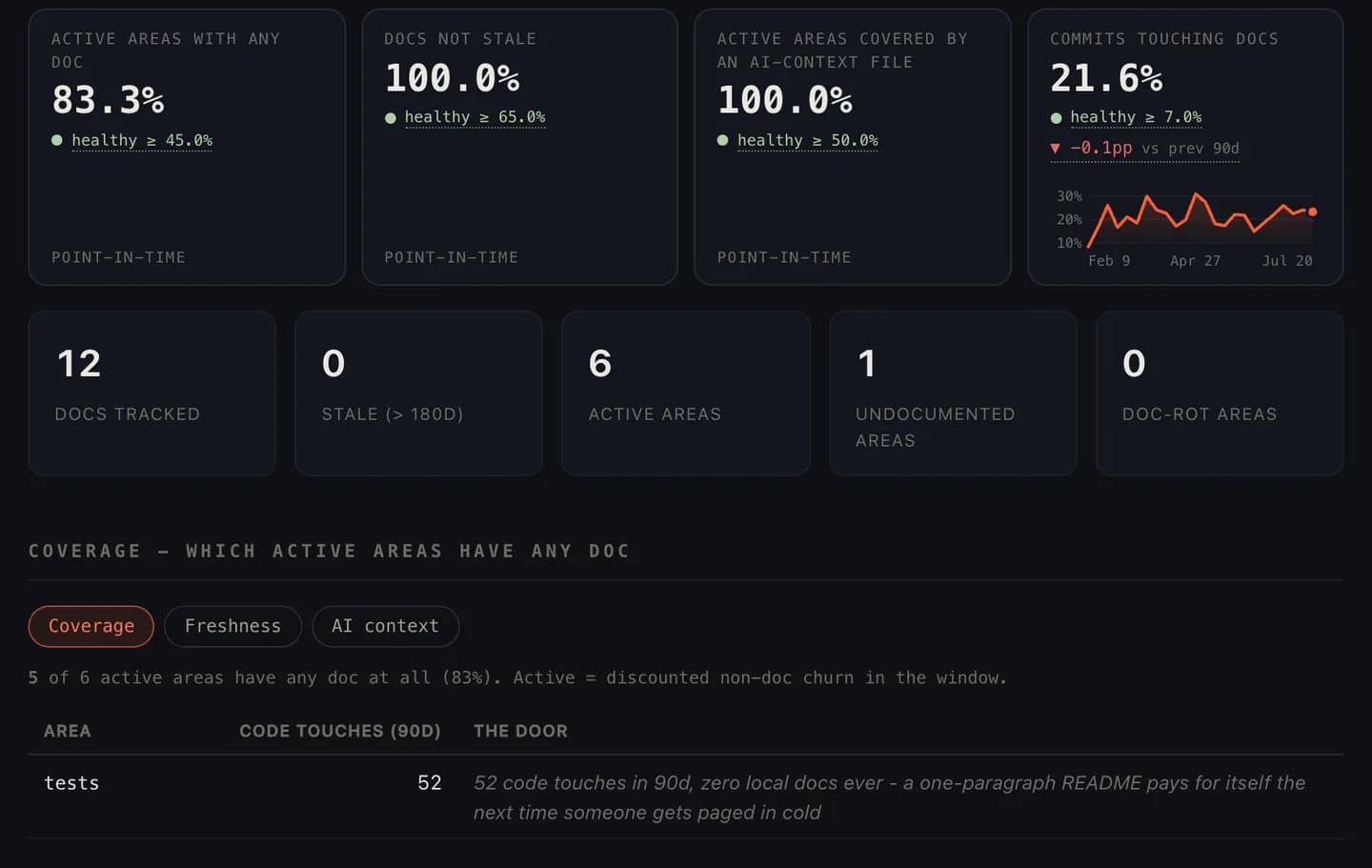
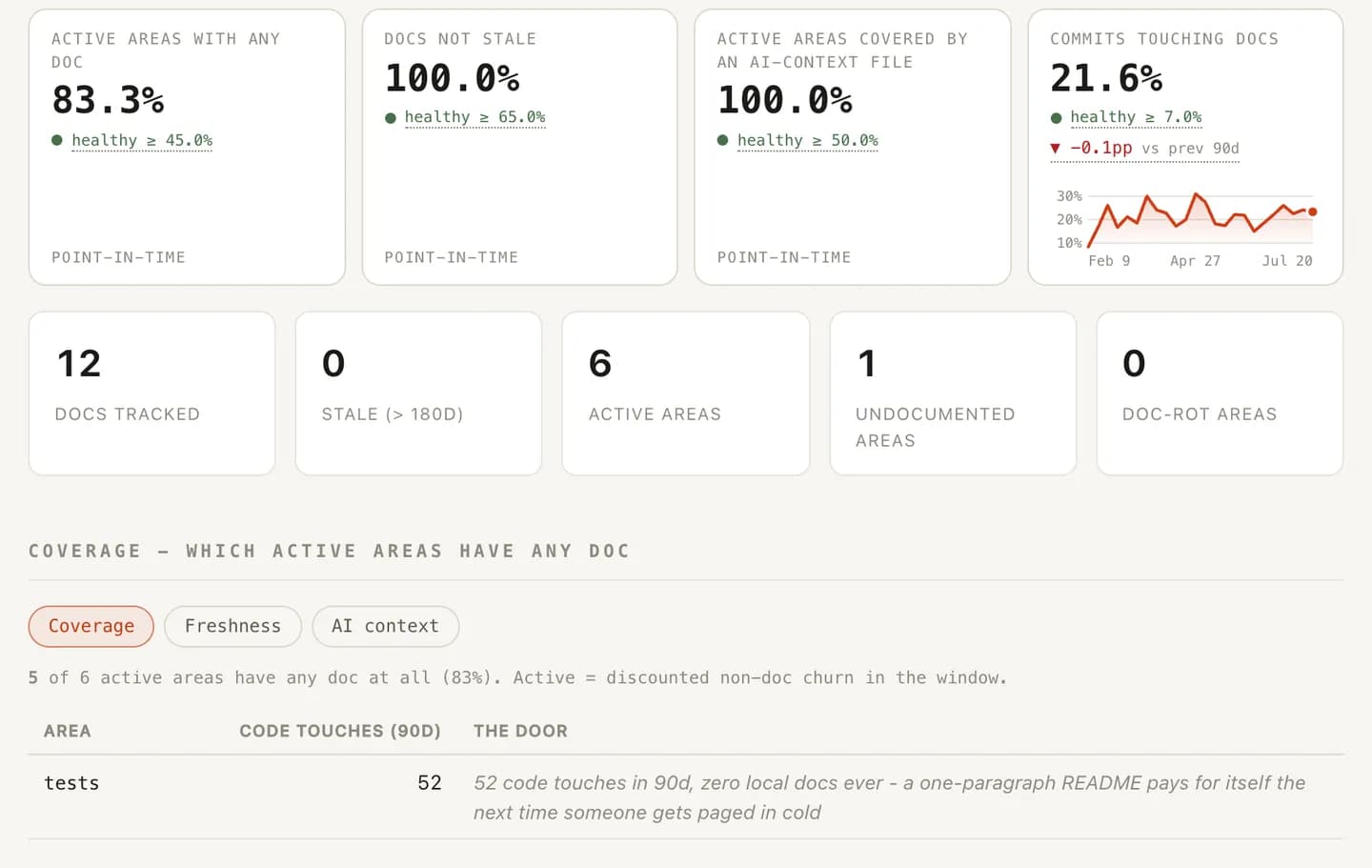
Documentation reduces bus factor only when it captures what git can't show: the why. Why the retry is 7 seconds, why the backfill never runs on Friday. The architecture will re-derive itself from code; the reasoning won't.
The honest rules: put the doc inside the area it describes so it changes when the code does, keep it short enough to be maintained, and write it only for areas that are both active and single-owned. A wiki built in a documentation sprint is a comfort blanket, and most of it is documentation debt the day it's merged. A one-page runbook next to the deploy script is a mitigation. The move here is narrow and concrete: get the tribal knowledge out of one person's head and into the repo, where the next hire and the next incident can both find it.
Move 4: Pairing and rotation programs (expensive, spend last)
Pairing transfers knowledge faster than anything else on this list, and costs more than anything else on this list: two people, one workstream, indefinitely. Which is exactly why "pair on everything" policies don't survive their first crunch.
Spend it surgically: pair on the hot paths where a departure would genuinely stop the business, and put an end date on it. The pairing ends when the second person has independently shipped. The same goes for formal rotation programs: rotating engineers through teams spreads knowledge on purpose, but it has real switching costs, so aim it at your worst areas rather than running it as a calendar ritual. The full menu of transfer mechanisms, and when each fits, is covered in knowledge transfer for engineering teams.
What doesn't work
Worth naming, because each of these is popular:
- "Everyone should know everything." Nobody ends up knowing anything deeply, your experts read it as distrust, and delivery pays daily for redundancy you needed in five places.
- The offboarding download. Two weeks of transfer from someone whose motivation has already resigned. Triage for when you're stuck there anyway is in your senior engineer quit, now what. Don't make it the plan.
- Hoping. The most widely deployed strategy in the industry, with the worst track record.
Keep score, or it un-happens
Bus factor re-forms the way it formed: silently, one reasonable routing decision at a time. The expert is fastest, so the ticket goes to the expert, so the expert stays fastest. Without measurement, six months of good moves erode back to the old map and nobody notices until the next resignation.
So re-measure on a schedule - same window, same method, per area - and watch one number: how many critical areas still have a single meaningful owner. That's the number that should shrink quarter over quarter. A continuously recomputed ownership map with exactly that ranking is what Busfactor's knowledge view renders from the git history you already have.
None of this requires slowing the team. It requires aiming: five areas, four moves, cheapest first, measured quarterly. The teams that stay fast through departures knew precisely where redundancy was worth buying, and bought it before the market did.
Frequently asked
What is the cheapest way to reduce bus factor?
Review rotation. Assign a second reviewer to every single-owner area and let them earn context by reading the expert's diffs. It costs minutes per PR, requires no ceremony, and research on modern code review shows knowledge transfer is one of its main real outcomes.
Does reducing bus factor slow the team down?
Done indiscriminately, yes: mandatory pairing on everything is a tax teams quietly stop paying. Done selectively, the slowdown is one deliberately slower feature per critical area, in exchange for never again having work queue behind a single unavailable person.
Should everyone on the team know everything?
No, and chasing that flattens your experts for no gain. The goal is redundancy where failure is expensive: at least two people who can safely operate each critical area. Dormant or low-stakes areas can stay single-owned without guilt.
How do I know if bus factor is actually improving?
Re-measure from git history on a schedule: count the areas where one person still authors and reviews nearly everything, and watch whether the critical ones shrink quarter over quarter. If the number never moves, the moves aren't sticking.