Your Release Date Is Fiction (and Your Team Knows It)
YOUR DATE IS FICTION
Slipping releases are rarely an estimation problem. Batch size, maintenance load, and invisible rework decide the date - here's the first free step to fix them.
TL;DR: If your last three releases slipped, your next one will too. The date was never the problem. Releases slip because of three things that never appear on the plan: batches too big to integrate cleanly, planned hours that maintenance already owns, and rework nobody budgeted. Estimating harder won't touch any of them. Cut the batch, make slip visible in week one instead of deadline week, and the dates start meaning something again.
The release was supposed to go out on the 15th. Then the 29th. Now it's "early next month," and you're rehearsing the update you'll give. It is the same update you gave last quarter, with the dates changed. The part that stings: your engineers knew it would slip weeks before you did. Everyone in the standup could feel it. Nobody could prove it, so the date stayed on the slide until reality took it off.
The date didn't fail. The date was never real - it was an estimate sitting on top of three forces nobody was measuring.
Why releases actually slip
1. The batch is too big. A release carrying six weeks of changes isn't one risk; it's every change's risk multiplied together: integration conflicts, review bottlenecks, that one migration nobody wants to touch. Reviewers physically can't vet it. SmartBear's Cisco research found reviewers are effective on 200-400 lines at a time, with defect discovery dropping sharply beyond that, so a big-bang release guarantees the review that would have caught the slip-causing bug never really happened. John Cutler lists "large batches" among his twelve feature-factory signs; big batches and slipped dates are the same disease. DORA's 2024 data frames the spread: elite teams deploy on demand, multiple times a day; low performers release monthly to once every six months. Guess which group has release-date drama.
2. The capacity was fiction. Your plan assumed 40 productive hours per person per week. Stripe's developer survey (1,000+ developers, self-reported) found an average 17.3 hours per week going to maintenance (debugging, bad code, refactoring) out of a 41.1-hour workweek. If your plan didn't subtract the keep-the-lights-on load, the schedule was optimistic before anyone wrote a line.
3. The rework was invisible. A PR stalls in review. A feature comes back from QA. Code gets churned within weeks of landing. None of that was on the plan, and all of it consumes the schedule. The plan tracked the work you intended; the calendar absorbed the work that actually happened.
Notice what's missing from this list: "the team estimated badly." Padding the estimate treats the 10% and ignores the 90%.
The cure starts free: shrink the release, not the estimate
You can do this on the next release, with no new tools, and it works whether or not you ever buy anything.
- Halve the release scope - physically. Whatever was going out on the 15th, split it into two releases. The first one ships what's genuinely done. Smaller PRs and smaller releases are the same principle at two zoom levels.
- Land work continuously behind flags instead of parking it on a long-lived branch. Integration pain stops accumulating into deadline week - it gets paid in small daily installments.
- Count scope added after the date was set. Every mid-cycle addition silently trades away the date. Make the trade explicit: in writing, something comes out for everything that goes in.
- Ask the only honest status question weekly: "what has reached production toward this release?" "In progress" is where slips hide. What good looks like: the answer is never zero two weeks running.
Smaller releases slip less, and when one does slip, it slips by days. The practice compounds too: each release exercises the same deploy path, so the path itself stops being a risk.
The slip was visible weeks ago, just not in the status meeting
The maddening part about the release you just moved: the evidence sat in your delivery data the whole time. PRs swelling past reviewable size. Review queues backing up. Scope creeping in mid-cycle. Deploy cadence stretching. Your team isn't slow; the status meeting only surfaces optimism, and optimism is a lagging indicator.
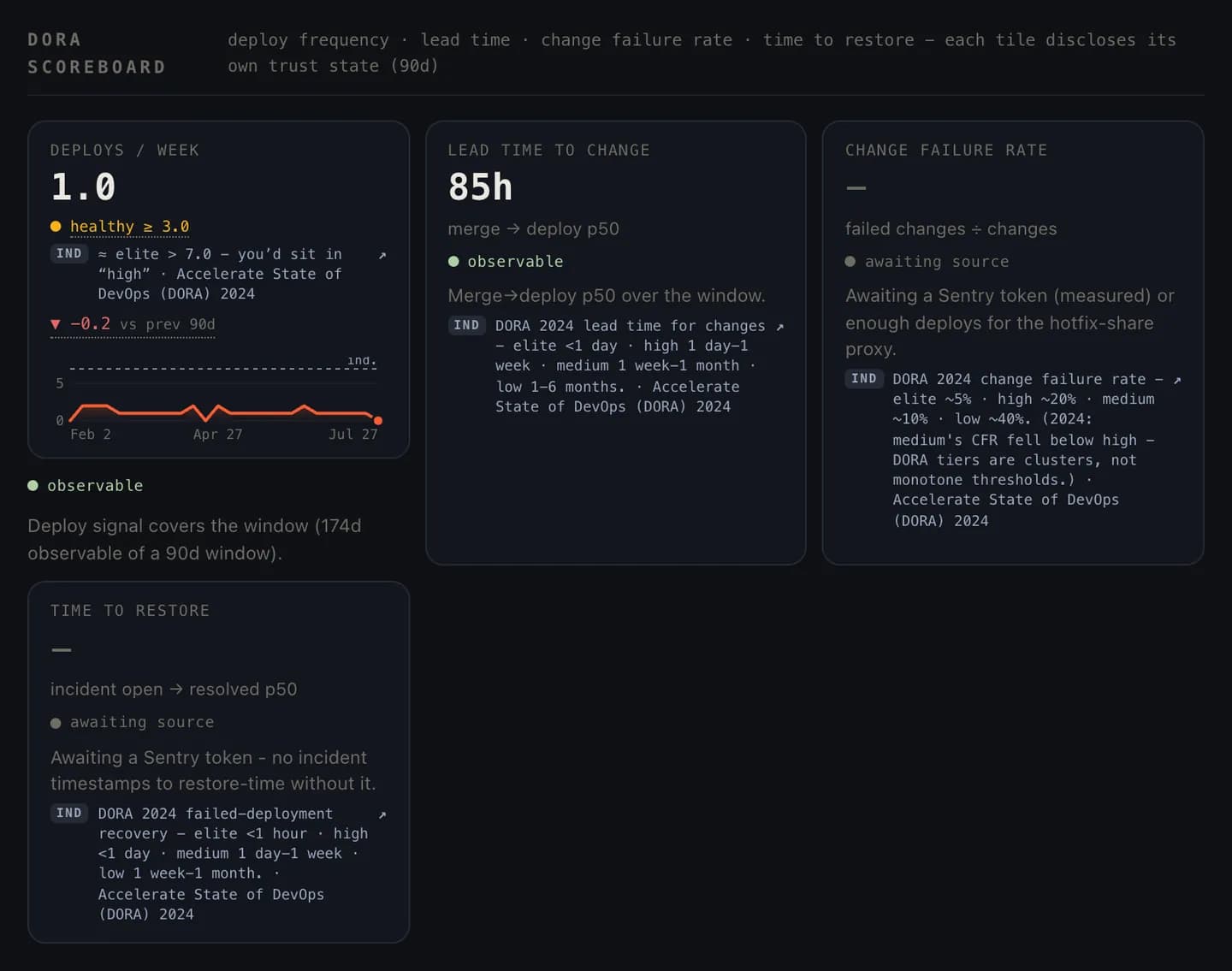
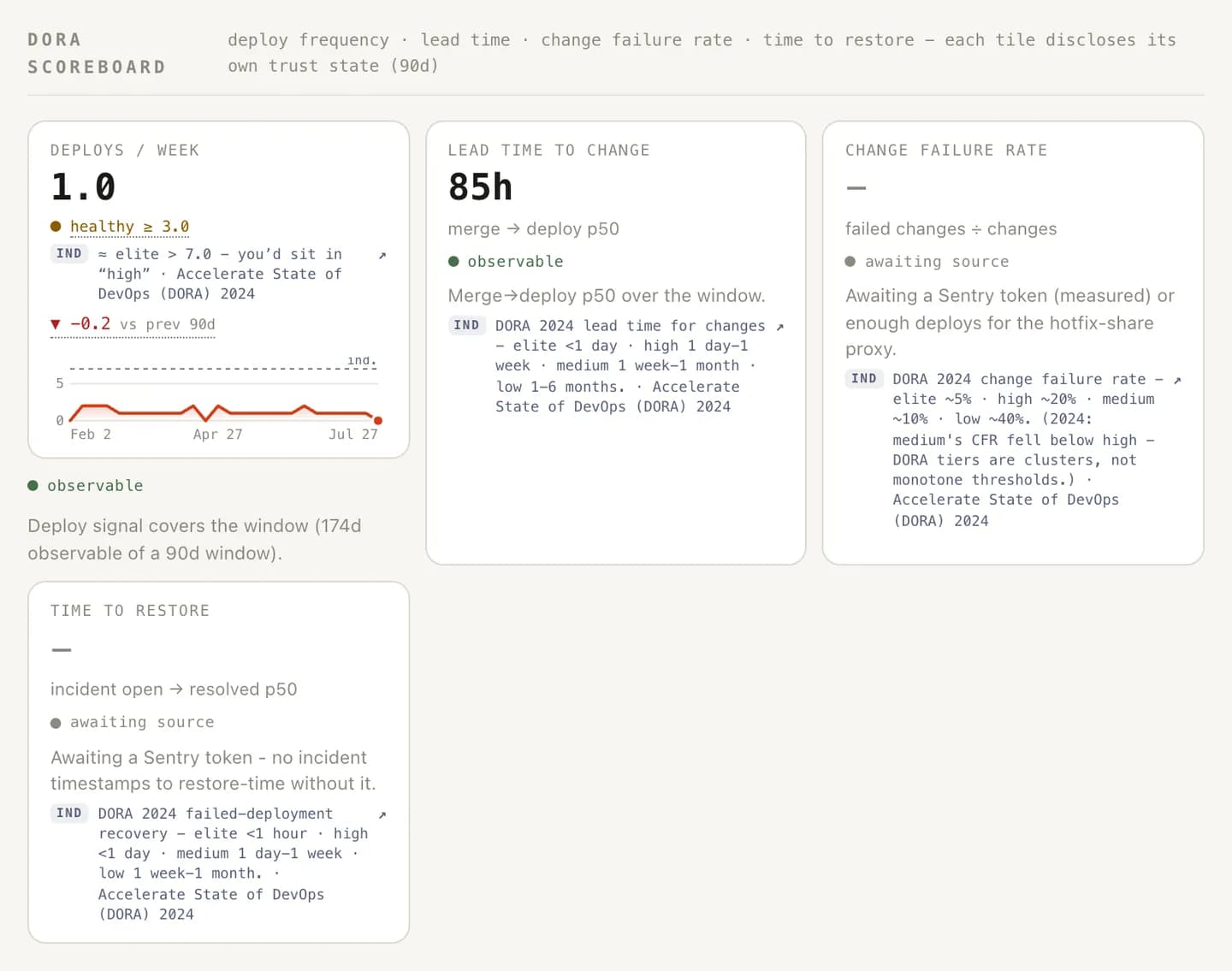
This is where a tool earns its keep, honestly stated: Busfactor watches the leading signals in your actual GitHub and deploy history (batch size, review queues, deploy rhythm, work that lands versus work that churns) and tells you while there's still time to react, with every claim linked to the PRs behind it. What no tool can do: know that a customer will demand a feature mid-cycle, or make a hard dependency easy. It won't stop every slip. It ends the specific ritual where everyone feels the slip for three weeks and you find out at the deadline.
The door
Next release: halve it, flag it, count what lands. That alone will make your dates start meaning something. If you want the early-warning system instead of the deadline-week surprise, the deploy-rhythm view shows what your release cadence actually looks like, receipts included, so the next date you give is one your own history supports. Your team already knows when the release will slip. You should get to know too.
Frequently asked
Why do software releases keep slipping?
Three compounding causes show up over and over: batches too big (one release carrying weeks of changes multiplies integration and review risk), capacity fiction (planning assumes hours that maintenance and interrupts already own), and invisible rework (stuck reviews and churned code that never appear on the plan). Estimation error is usually the smallest of the four.
Does more detailed planning stop releases from slipping?
Mostly no. Planning harder refines the guess; it doesn't touch the queues, rework, and maintenance load that consume the schedule. The reliable lever is shrinking the release itself: smaller batches slip less because each one carries less risk, and when one does slip, it slips by days instead of months.
How often should we be releasing?
DORA's 2024 tiers: elite teams deploy on demand (multiple times per day), high performers daily to weekly, low performers monthly to once every six months. The direction matters more than the tier; each step toward smaller, more frequent releases removes slip risk from every individual release.
How do I see a slip coming before the deadline week?
Watch the leading signals, not the milestone: PRs growing past reviewable size, review queues backing up, scope still being added mid-cycle, and deploy cadence stretching. A release that will slip looks different weeks out - but only in the delivery data, never in the status meeting.