Knowledge Transfer: Getting It Out of People's Heads
TWO WEEKS ISN'T TRANSFER
Knowledge transfer fails when it's a two-week offboarding panic. How to make it continuous with code review, pairing, rotation, and docs that live in the repo.
TL;DR: The worst time to transfer knowledge is during a two-week notice period, which is when most teams schedule it. The channels that actually work - review rotation, pairing on hot paths, ownership swaps, docs next to the code - run continuously on work you're already doing. Microsoft's code-review research found reviews deliver knowledge transfer and team awareness more than the defect-hunting everyone expects. Transfer is a system property, and git history tells you whether it's running.
The ritual goes like this. Someone resigns. A calendar invite appears: "Knowledge Transfer - Payments System," ten hours across two weeks. The departing engineer talks through architecture diagrams at a colleague who takes notes they will never successfully re-read. Everyone performs diligence. Three months later the first real payments incident hits, the notes don't cover it, and the team learns what was actually transferred: a summary of a map, not the ability to drive the territory.
The failure wasn't effort. It was scheduling. Knowledge transfer that starts at resignation is archaeology with the site still walking around the office - motivated to be helpful, gone before you know which questions you needed to ask.
What is knowledge transfer, actually?
Deliberately moving working context - how a system behaves, why it's shaped this way, how to operate it under stress - from the heads that hold it into other heads and durable artifacts. The "working" matters: transfer is complete when the receiver can safely change and operate the system with the original expert unavailable, and not a moment before.
That bar explains why the offboarding ritual fails, and why transfer is the standing answer to bus factor risk rather than a one-time cure. Knowledge concentration is a system property that re-forms continuously: every efficient routing decision pools context in whoever's fastest. A team that only transfers at departures is bailing a boat that only leaks. And the leak is expensive daily, not just at exits: in the 2024 Stack Overflow Developer Survey, 61% of professional developers reported spending more than 30 minutes a day searching for answers or solutions. Much of that is untransferred context being hunted, one Slack ping at a time.
Which knowledge transfer methods actually work?
Four channels, ordered cheapest-first. The pattern across all of them: attach transfer to work that's already happening, instead of scheduling it as separate ceremony.
Code review as transfer
The most underrated channel, and the best-evidenced. In "Expectations, Outcomes, and Challenges of Modern Code Review", Bacchelli and Bird studied review practice at Microsoft and found a gap between expectation and reality: developers named finding defects as the main motivation, but in practice reviews were less about defects than expected. The outcomes included knowledge transfer, increased team awareness, and alternative solutions. Reading a colleague's diff into a system, with the license to ask "why is it like this?", builds real operating context on work that was happening anyway.
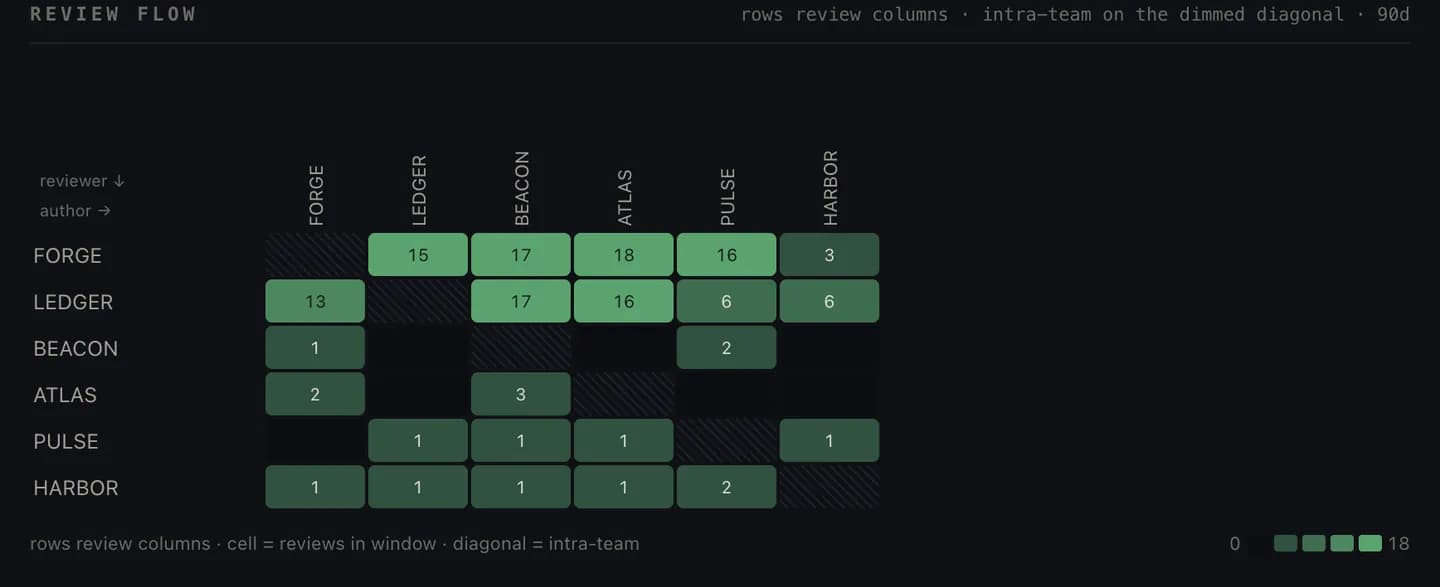
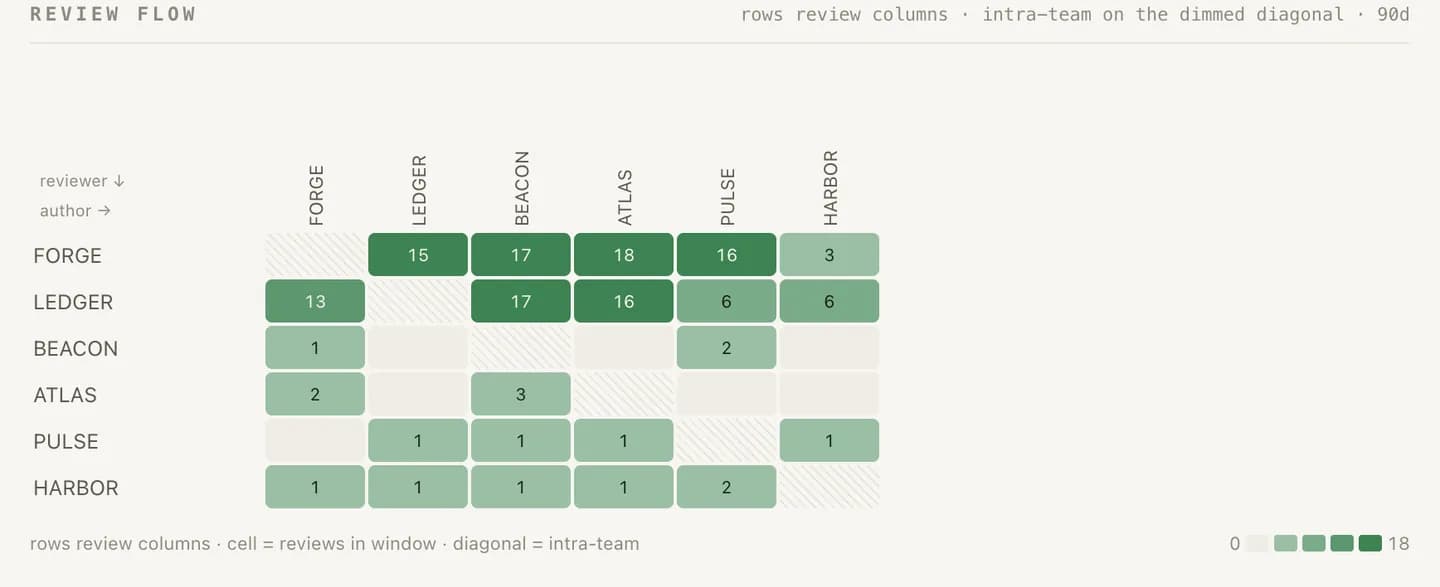
The transfer only flows where reviewers rotate, though. If the same expert reviews every change into their own area, review concentrates knowledge instead of spreading it - the single-reviewer SPOF pattern. Rotate a second reviewer into each critical area and the same PRs become a curriculum. And it scales without wrecking throughput: Google's review process (Sadowski et al., studying millions of reviewed changes) sustains a median reviewer response under 4 hours, with small changes getting first feedback in under an hour. Review-as-education does not cost you delivery speed.
Ownership swaps
Route the next meaningful feature in a concentrated area to a non-expert, with the expert reviewing instead of authoring. One feature ships slower; the area permanently gains a second person who has operated the code, not just heard about it. This is the highest transfer-per-hour move available, and which areas need it is a ranking question: your knowledge-silo map is the backlog, blast-radius first.
Pairing and shadowing on the hot paths
The expensive channel, so spend it precisely: pairing on the areas where a departure genuinely stops the business, and shadowing on operational knowledge - deploys, incident response, the migration nobody wants to run alone. Rule of thumb: the second person drives, the expert navigates. Watching transfers a demo; driving transfers competence.
Docs where the churn is
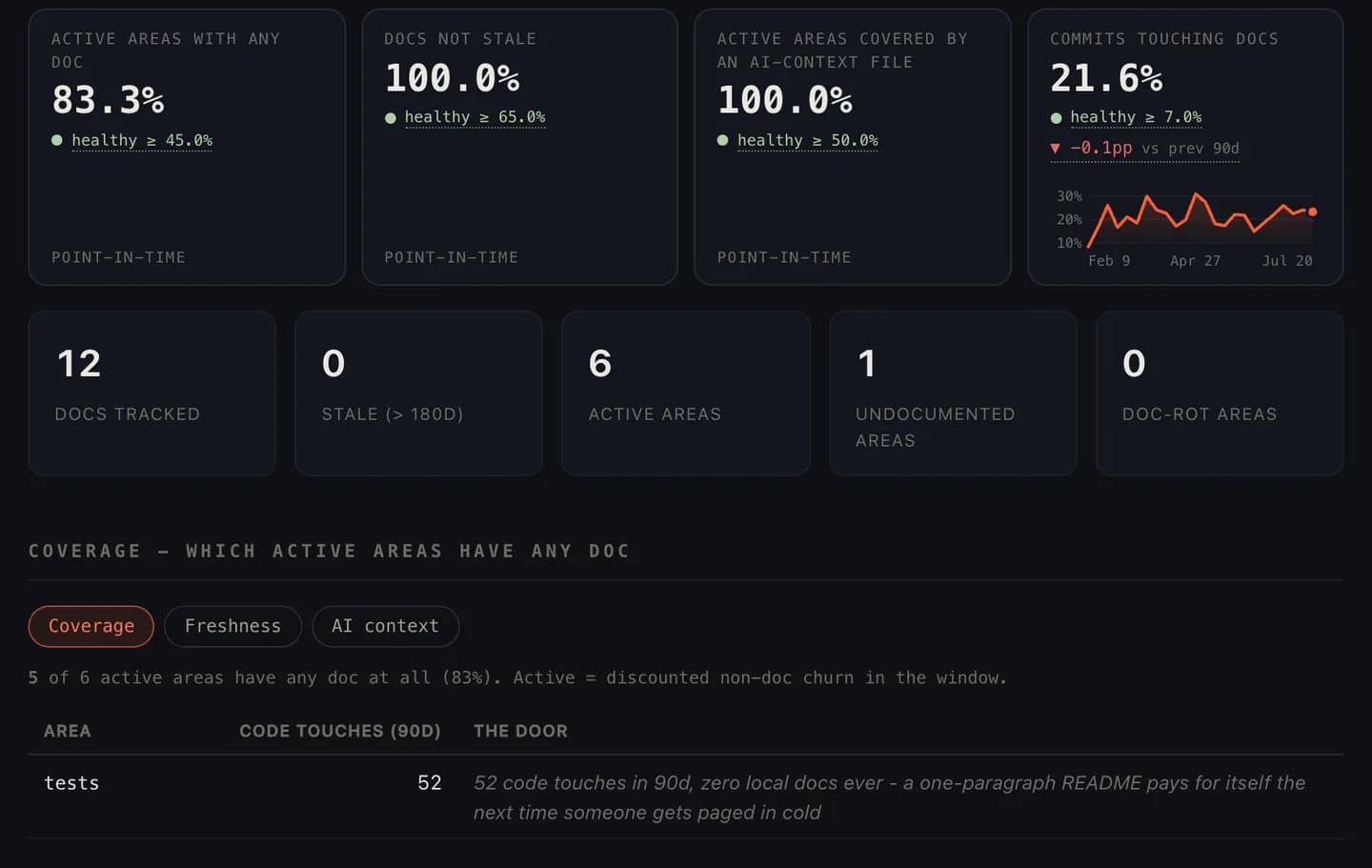
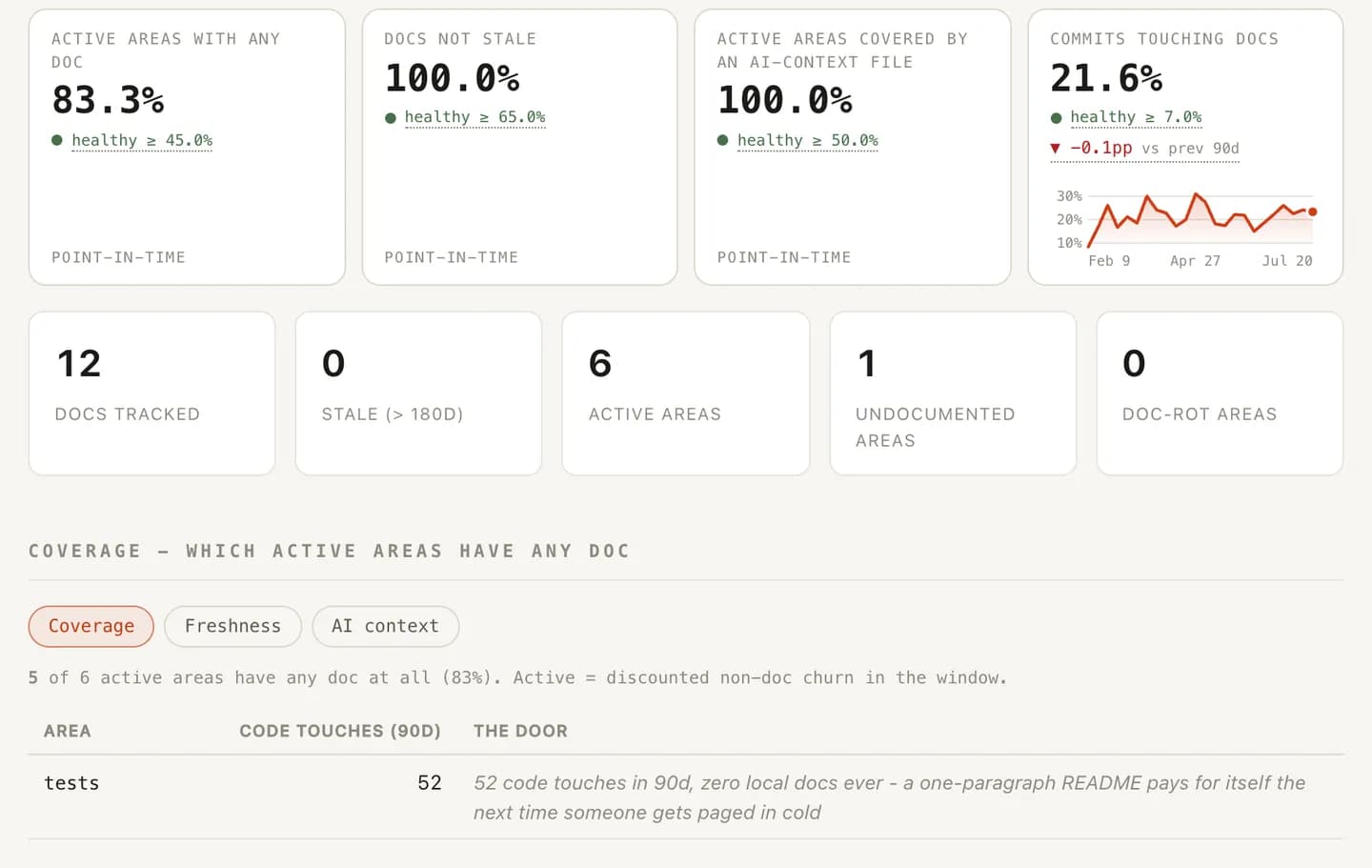
Writing is the only channel that survives everyone currently on the team, and the only one that scales to readers who haven't joined yet. But documentation is a transfer channel only when it lives next to the code and gets written with a learner: the runbook drafted while rotating someone into the area is battle-tested by a real novice on day one. Docs written as an archive rot into documentation debt. Docs written as apprenticeship artifacts stay true.
Make transfer continuous instead of an event
Wire it into the system so it doesn't depend on anyone remembering:
- Every critical area has a named second. Not "the team backs it up" but a person, rotating quarterly, who reviews changes there and takes the next feature. Your ownership model should make this explicit: weak ownership with a deliberate second is the transfer-friendly configuration.
- Review assignment spreads, never pools. If area expertise is a review-routing criterion, make earning expertise one too.
- Transfer triggers on arrival signals, not departure signals. New hire joining, team split, system entering the critical path: these are the cheap moments. The resignation is the expensive one.
- Onboarding is transfer's report card. Every question a new engineer must ask a human is a failed transfer to artifacts. Collect them; they're your docs backlog, pre-ranked by demand.
How do you know it's working?
The same way you found the problem: git history. Transfer that's working shows up as ownership spreading: areas that had one meaningful contributor gaining a second, review load distributing across names, the contributor list of your critical areas unfreezing quarter over quarter. The bus factor calculation run on a schedule is the scoreboard, and a continuously computed ownership map is the live version. It's part of the same team-health picture that tells you whether the org is getting more resilient or just busier.
And keep the frame honest: the expert whose head holds the system is not the problem. They're the person who never turned down the hard assignments. Transfer done right is the thing that finally lets them take a real vacation, change teams without guilt, or get promoted off the pager. Getting it out of their head is a gift to them. Build the second copy while it's cheap. The alternative is that calendar invite, and you already know how that story ends.
Frequently asked
What is knowledge transfer in engineering teams?
Deliberately moving working context (how a system behaves, why it's built that way, how to operate it) from the heads that hold it into other heads and durable artifacts. Done continuously it's cheap; deferred to offboarding it's a two-week panic that mostly fails.
Why do knowledge transfer sessions fail?
Because they're scheduled after the resignation, when motivation has left the building and the clock is short. Explaining a system in a meeting transfers a summary, not competence; the receiving engineer never operates the system with the expert still there to catch them.
Is code review an effective knowledge transfer method?
Yes. Research at Microsoft found that in practice, code review's benefits were less about defects than expected, and included knowledge transfer, team awareness, and alternative solutions. Rotating a second reviewer into an area is the cheapest transfer channel most teams aren't using.
How do you measure whether knowledge transfer is working?
Watch ownership spread in git history: areas that had one meaningful contributor gaining a second, review load distributing, questions no longer routing to a single name. If the bus factor of your critical areas rises over quarters, transfer is happening; if the map is frozen, it isn't.