Is Your Team Ready for AI Coding Tools? A Checklist
ADOPTION ISN'T READINESS
Adoption is not readiness. The checklist that predicts whether AI coding tools will compound your output or your debt: reviews, tests, attribution, rework.
TL;DR: Most teams evaluate AI coding tools by trying them. Almost none evaluate whether the system around the tools can absorb what they produce. Readiness is checkable before rollout: review coverage that means something, tests that actually gate, deploy observability, honest attribution, and a pre-rollout baseline. Teams that pass the checklist compound output. Teams that don't compound debt, and the research is unambiguous about which bill arrives.
Why readiness is not the same as adoption
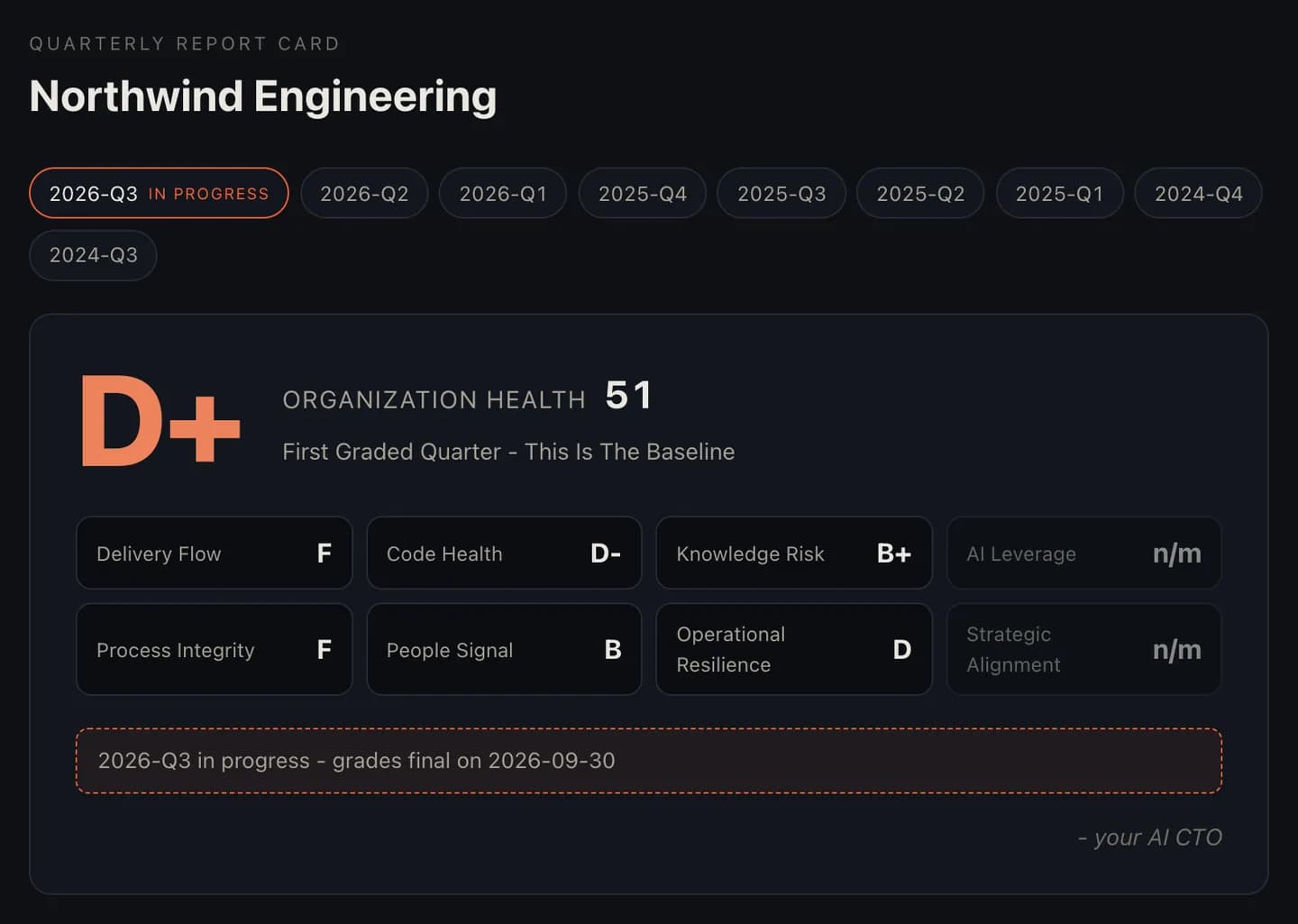
Adoption is easy to measure: seats bought, extensions installed, suggestions accepted. Readiness asks a different question: what happens to everything the tool produces after the developer hits accept?
The distinction matters because the independent research keeps finding the same divergence. DORA's 2024 report found AI adoption improved individual productivity, flow, and job satisfaction, while its estimates associated a 25% increase in AI adoption with a 1.5% decrease in delivery throughput and a 7.2% decrease in delivery stability. Individually faster, organizationally slower. The gap comes from the system the tools were dropped into.
The mechanism is mundane: AI multiplies the volume of plausible code flowing toward production. Every weakness in your pipeline - thin review, missing tests, invisible deploys - was survivable at human typing speed. At generation speed, the same holes leak proportionally more. GitClear's analysis of 623 million code changes measured code-block duplication up 81 percent against 2023 and refactoring line-moves down 70 percent against 2022 levels, with moved code falling from 21 percent of changed lines in 2022 to 3.8 percent year to date in 2026; Faros AI measured bugs per developer up 54 percent at high AI adoption. None of that is inevitable. All of it is what unreadiness looks like at scale.
The AI coding readiness checklist
Each item is checkable against your repo this week - no vendor questionnaire required.
1. Review that actually reviews
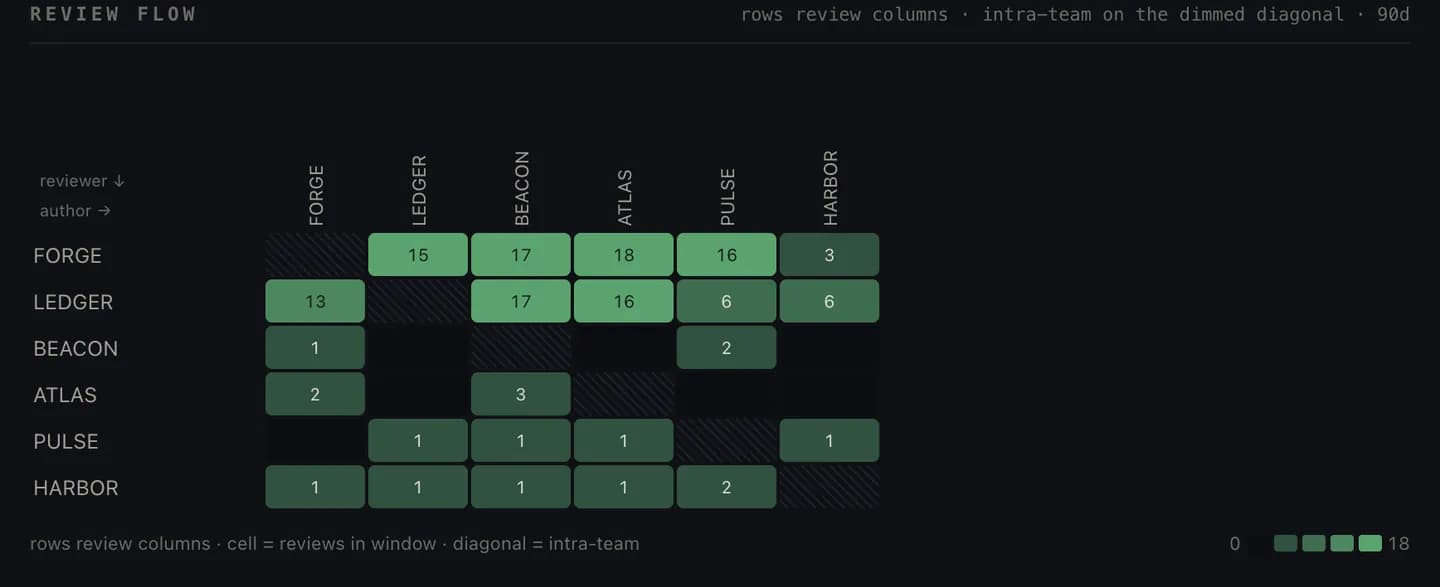
Forget "we have required reviewers." The question is real coverage with real depth: what share of merged PRs got a review with substance, and how fast is pickup? The Cisco-based SmartBear research found well-run reviews catch 70-90 percent of defects, with detection dropping sharply past ~500 lines per hour. Review only protects you if PRs stay small enough to actually read. If your review coverage is already spotty, or rubber-stamp approvals are common, AI volume will widen that hole first. Small pull requests are the cheapest readiness upgrade on this list.
2. Tests that gate, not decorate
AI-generated code is plausible by construction: it looks right. The only cheap mechanism that checks whether it is right at merge time is a test suite that fails on behavior change. Check honestly: do your critical paths have tests? Do they run on every PR? Does a red build actually block merge, or does someone override it every Friday? A suite that exists but doesn't gate is decoration, and decoration doesn't stop generated regressions.
3. Deploy and incident observability
When the extra volume ships, will you notice what breaks? Readiness means you can connect a deploy to a defect: deploy tracking, error monitoring, and some record of incidents and their fixes. Without it, the Faros-style bug increase never shows up in a dashboard. It shows up as on-call fatigue and an argument nobody can win.
4. Attribution you can defend
Before rollout is the moment to establish how AI-assisted work will be identified: commit trailers, bot and agent accounts, co-author conventions. Explicit signals cost nothing at adoption time and are nearly impossible to retrofit. Without them, every future question (is churn concentrated in assisted code? did quality move?) becomes unanswerable. The full method is in how much of our code is AI-written.
5. A baseline, captured before day one
Cycle time, review pickup, short-window churn, defect counts - pulled from the quarter before rollout. This is the single most skipped item and the most expensive to skip: without a baseline, you cannot measure the ROI of the tools, and the renewal decision defaults to whoever argues loudest. The METR randomized trial is the standing warning about the alternative: its experienced developers were 19 percent slower with AI while estimating they were 20 percent faster. Self-report is not a baseline.
6. A churn watch, armed in advance
Decide now that you'll track two-week post-merge churn (the research convention) and duplication trend, starting at rollout. AI code churn covers the measurement. Arming the metric in advance turns "did quality slip?" from a quarterly argument into a chart.
Scoring it honestly
Six items. The honest read, with no maturity-model theater:
- 5-6 solid: roll out broadly, measure quarterly, expect real gains on well-specified work. Your system can absorb the volume.
- 3-4 solid: roll out where the net is strongest and fix the top gap in parallel - usually review discipline or the baseline, both fixable in weeks.
- 0-2 solid: the tools aren't your problem, and they aren't your solution either. Unreviewed, untested code shipped faster is just debt with better ergonomics. Fix the net first. The wider evidence says the same tools behave completely differently once it's in place.
The checklist is a sequencing plan, not a gate. Every item on it is worth having with or without AI; generation speed just converts "worth having" into "load-bearing." Check first and you get the compounding version of this technology. Skip the check and the churn data will eventually tell you which version you bought.
Frequently asked
What does readiness for AI coding tools actually mean?
Readiness means your engineering system can absorb a step-change in code volume without quality collapsing: review that reliably catches defects, tests that fail when behavior changes, deploy observability that notices regressions, and a baseline so you can measure the before/after. Buying seats is procurement; readiness is the safety net underneath them.
Can a team be too small or too early for AI coding tools?
Rarely too small; solo developers and tiny teams often benefit most on greenfield work. But a team of any size that ships unreviewed, untested code to production is unready: AI raises the volume flowing through whatever holes already exist. Fix the net first; it usually takes weeks, not quarters.
Should we block AI tools until every checklist item passes?
No. Readiness is per-area, not binary. Roll out where the net is strong (reviewed, tested services) and hold back on the fragile legacy area with no tests and one maintainer. Use the gap list as the sequencing plan, not a reason to stall.
Receipts
- DORA - Accelerate State of DevOps Report 2024
- GitClear - The AI Code Quality Maintainability Gap (2026, 623M code changes)
- Faros AI - AI Acceleration Whiplash, AI Engineering Report 2026
- METR - Measuring the Impact of Early-2025 AI on Experienced Open-Source Developer Productivity (RCT)
- SmartBear - Best Practices for Peer Code Review (Cisco Systems study)